
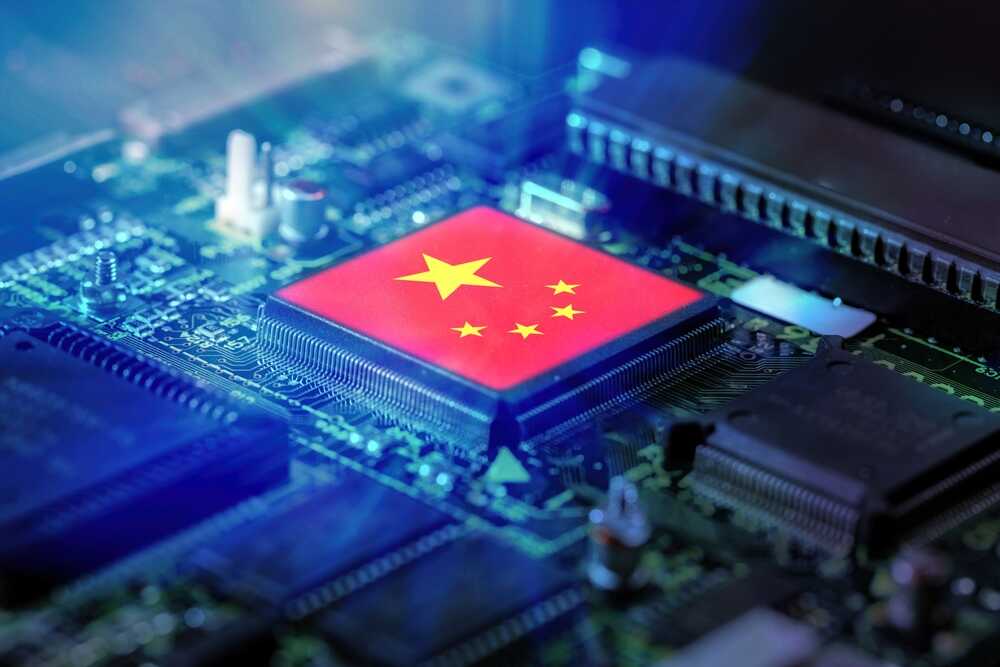
In October 2025, China’s Communist Party unveiled a new economic plan emphasizing technological self-reliance. This initiative is presented as a strategic response to external pressures, particularly US export controls, and aims to reduce dependency on Western technology by boosting indigenous innovation across key sectors.
Story Highlights:
- October 2025 Economic Plan: China’s Communist Party announces technological self-reliance as a central pillar of its new economic strategy.
- Response to US Sanctions: The move is a strategic reaction to US export controls and semiconductor sanctions implemented since 2018.
- Increased R&D Investment: Record research and development funding is being directed towards areas such as artificial intelligence, quantum computing, and domestic chip production.
- Leadership Statement: President Xi Jinping has called for overcoming “bottlenecks in core technologies.”
China’s Strategic Economic Pivot:
The Chinese Communist Party’s Fifth Plenum announced its new economic blueprint in October 2025, positioning science and technology self-reliance at the core of its national strategy. President Xi Jinping stated that this initiative is crucial for “breaking through bottlenecks in core technologies,” directly addressing vulnerabilities highlighted by years of US sanctions. This represents a comprehensive effort by China to reduce reliance on Western technology and develop its own innovation capabilities in critical industries.
China vowed to seek technological self-reliance and grow the domestic market in the next five years, as it looks to build a sustainable engine for growth https://t.co/XdkLpE0ftM
— Bloomberg (@business) October 23, 2025
Response to American Economic Measures:
China’s drive for technological independence is directly linked to escalating US export controls, which began during the 2018 trade dispute and intensified through 2024. These American sanctions targeted Chinese companies, including Huawei and SMIC, by restricting access to advanced semiconductors and manufacturing equipment. These economic measures have reportedly accelerated China’s existing “Made in China 2025” initiative, transforming it into a national security priority requiring significant state intervention and resource allocation.
State Investment in Key Technologies:
Beijing has committed substantial R&D spending to achieve advancements in semiconductors, artificial intelligence, quantum computing, and biotechnology. New national semiconductor funds were launched in early 2024, and advanced research centers have been established to coordinate resources from state, industry, and academic sectors. Reports in mid-2024 indicated breakthroughs in domestic lithography equipment, suggesting that China’s state-directed approach may be yielding results despite some skepticism from Western analysts regarding the speed of technological independence.
Implications for Global Technology Competition:
China’s self-reliance strategy has the potential to fragment global technology standards and supply chains, potentially leading to the creation of separate technological ecosystems. This development could impact decades of economic interdependence that have contributed to global stability. The policy shift may accelerate technological decoupling between China and Western nations, potentially requiring countries worldwide to align with competing technological standards. Such fragmentation could present challenges for American companies reliant on Chinese markets and integrated global supply chains.
The success of China’s technological independence campaign will depend on addressing technical challenges, talent shortages, and systemic inefficiencies associated with state-directed innovation. However, the combination of significant government resources, national security urgency, and coordination across public and private sectors may facilitate rapid progress in critical technologies, potentially influencing American technological leadership in key sectors within the next decade.
Watch the report: China Seeks Sci-Tech Self-Reliance, Strength at High Level
Sources:
China to focus on speeding up self-reliance in science and tech in new economic plan
China to focus on speeding up self-reliance in science and tech in new economic plan
China to focus on speeding up self-reliance in science and technology in new economic plan