

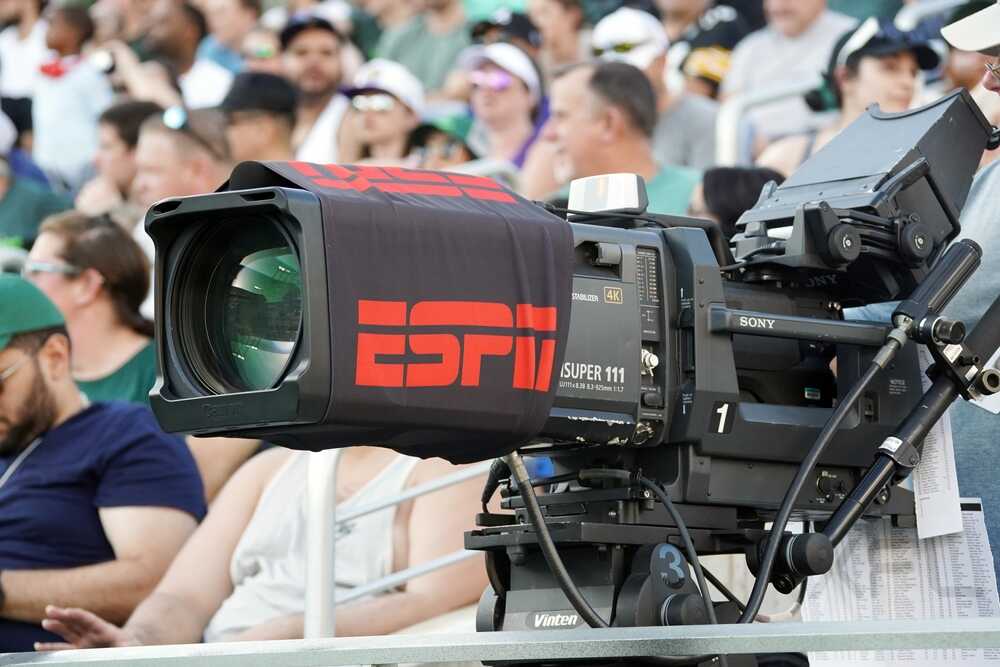
ESPN is preparing to slash approximately 30 jobs after a disastrous carriage dispute with YouTube TV cost parent company Disney $100 million, exposing how corporate giants are willing to sacrifice American workers to offset their own failed negotiations.
Story Snapshot
- ESPN faces layoffs of roughly 30 off-camera employees following an unexpected $100 million revenue loss from a fall 2025 YouTube TV dispute
- The sports network’s subscriber base has plummeted from 100 million to 60 million households over the past decade due to cord-cutting
- YouTube TV, backed by Google’s deep pockets, gained unprecedented leverage over ESPN during a 15-day blackout that occurred during peak football season
- The cuts highlight a broader shift in media power dynamics where streaming distributors now dictate terms to traditional broadcast networks
Corporate Miscalculation Costs Workers Their Livelihoods
Puck reporter John Ourand revealed April 6, 2026, that ESPN is preparing another round of job cuts affecting approximately 30 positions, primarily in off-camera departments. The layoffs stem directly from a $100 million revenue shortfall caused by ESPN’s failed negotiating strategy with YouTube TV during fall 2025. Sources familiar with the situation told multiple outlets the cuts will target production and operational staff rather than on-air talent, suggesting ESPN executives are more concerned with protecting their public faces than the workers who make their broadcasts possible.
YouTube TV Dispute Exposes ESPN’s Eroding Market Power
The revenue crisis originated during a 15-day blackout of ESPN networks on YouTube TV that occurred during critical college and professional football weekends in fall 2025. Historically, ESPN held overwhelming leverage in carriage disputes due to its dominant sports programming portfolio. However, YouTube TV’s backing by tech giant Google fundamentally altered the power dynamics. The resulting agreement favored YouTube TV’s terms, costing Disney and ESPN approximately $100 million in lost revenue. This represents a significant departure from past disputes where ESPN typically emerged victorious, underscoring how technological disruption and corporate consolidation are reshaping traditional media economics at workers’ expense.
Decade-Long Subscriber Collapse Signals Industry Crisis
ESPN’s current struggles reflect a broader collapse in traditional cable television. The network has hemorrhaged subscribers over the past decade, plummeting from 100 million households to just 60 million. This 40 percent decline illustrates how cord-cutting has devastated linear television networks that once dominated American sports coverage. Meanwhile, ESPN faces mounting pressure from escalating sports rights costs, with upcoming NFL negotiations potentially increasing fees by 50 to 60 percent. The combination of shrinking subscriber revenue and exploding content costs creates an unsustainable business model that inevitably results in job losses for rank-and-file employees while executives preserve their compensation packages.
Off-Camera Workers Bear Brunt of Executive Failures
The targeted nature of these layoffs reveals corporate priorities that prioritize optics over substance. Unlike previous rounds that eliminated high-profile on-air personalities, this wave specifically targets off-camera production and operational staff whose departures generate less public attention. ESPN sources emphasized the cuts are unrelated to the network’s recent acquisition of NFL Media, suggesting management is compartmentalizing financial decisions to obscure accountability. The timing is particularly cruel, as ESPN simultaneously onboards new NFL Network staff while preparing pink slips for existing employees who contributed to building the network’s sports dominance over decades.
Broader Implications for American Media Workers
ESPN’s situation exemplifies the precarious position of American workers in an industry controlled by consolidated corporate powers and tech monopolies. When Google-backed YouTube TV can force a $100 million concession from Disney-owned ESPN, ordinary employees inevitably pay the price through job eliminations. This dynamic transcends political divisions, affecting workers regardless of their ideological leanings. The sports media consolidation accelerated by these developments foreshadows similar challenges across traditional broadcasting, where streaming platforms backed by Silicon Valley billions increasingly dictate terms to legacy media companies. As distributors gain leverage and content costs skyrocket, the American workers who actually produce the content find themselves expendable in boardroom calculations focused solely on quarterly earnings and executive bonuses.
Sources:
ESPN Layoffs Reportedly Expected Following Decline in Revenue
Report: ESPN again eyes layoffs following revenue dip
ESPN Set to Begin Layoffs Due to ‘Unexpected Revenue Dip’: Report
ESPN reportedly set for another round of layoffs
Layoffs imminent, primarily off-camera departments