
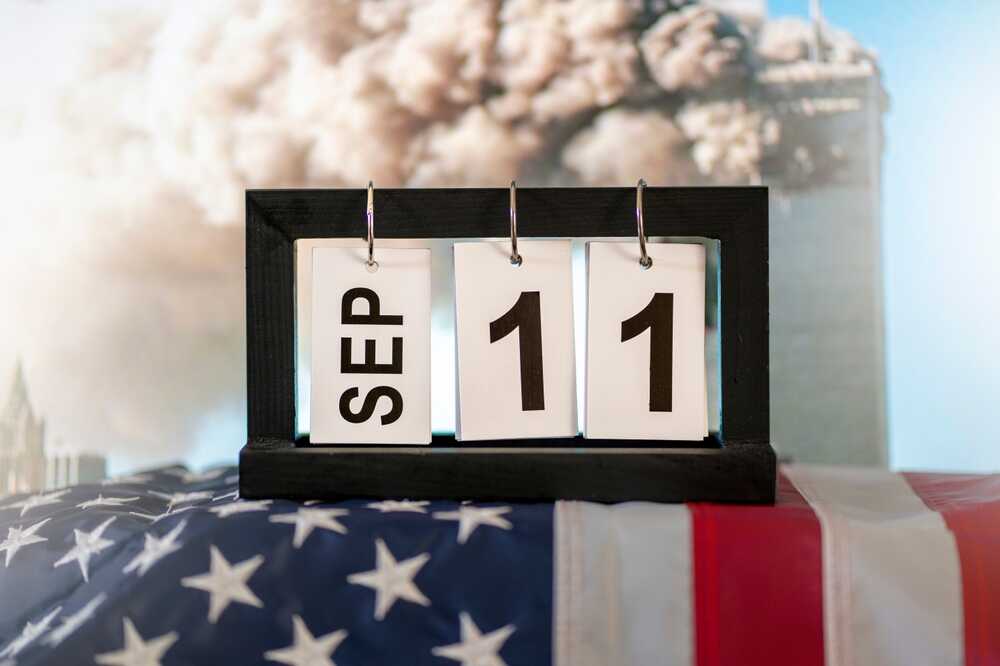
Nearly 25 years after the September 11 attacks, more than 1,100 victims remain unidentified, underscoring the scientific and emotional challenges faced by families still waiting for closure.
At a Glance
- Over 1,100 victims of the September 11 attacks remain unidentified.
- The New York City Office of Chief Medical Examiner (OCME) has identified 1,653 victims to date.
- DNA technology is being used to analyze more than 20,000 remains from Ground Zero.
- Recent advances have enabled the identification of three additional victims in August 2025.
- Unidentified remains are preserved at the World Trade Center Memorial repository.
Ongoing Challenges in Identifying 9/11 Victims
Since September 2001, the OCME has undertaken the unprecedented task of identifying the victims of the attacks. While traditional forensic methods were initially applied, the unique conditions of Ground Zero left thousands of remains fragmented and degraded. This made DNA technology the most viable path forward, though the scale of the work has proven immense.
Watch now: 9/11 Victim Identification Efforts Nearly 25 Years Later · YouTube
As of August 2025, 1,653 victims have been positively identified, but over 1,100 remain unknown. Each new identification brings comfort to some families but also underscores the length of time others have endured without closure. The OCME continues to test samples, reaffirming its long-term commitment to honoring those lost.
The Role of DNA Technology
The shift to DNA-based methods has been critical. Advances in extraction and amplification techniques now allow testing of extremely small or degraded samples that were once thought unusable. These methods have directly led to new identifications in recent months, including three additional victims named in 2025.
The remains recovered from Ground Zero—nearly 20,000 in total—present challenges that still test the limits of forensic science. Many samples are fragmented and chemically altered, requiring innovative approaches. The OCME’s work has influenced global best practices in disaster victim identification, pushing forward the boundaries of forensic science.
Impact on Families and Society
For families of the unidentified, the absence of resolution sustains grief and prolongs what psychologists describe as ambiguous loss. Each new identification not only provides solace to one family but also renews public reflection on the broader legacy of September 11.
The dignified storage of unidentified remains at the World Trade Center Memorial serves as both a symbolic resting place and a reminder of ongoing efforts. The process has shaped disaster victim protocols worldwide, ensuring that future responses to mass casualty events are informed by the lessons of 9/11. In this way, the pursuit of closure for families continues to resonate beyond New York, embodying a commitment to memory, dignity, and scientific progress.
Sources
ABC News
CBS News
PubMed
NYC.gov
National Institute of Justice