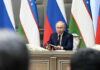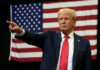


Amidst promises of economic cooperation, skepticism rises as China’s trade deal compliance with the U.S. hangs in the balance. Announced in November 2025 by Presidents Trump and Xi Jinping, the deal includes China’s promise to suspend rare earth export controls and open markets to U.S. agricultural exports. However, officials remain skeptical, recalling a history of China’s partial compliance and slow implementation, which suggests uncertainty looms over the agreement’s long-term success and its ability to resolve core structural challenges like intellectual property theft.
Story Highlights
- China’s history of partial compliance raises doubts about the new trade deal.
- Key concessions include rare earth exports and agricultural imports.
- Uncertainty looms over China’s follow-through on commitments.
- Strategic vulnerabilities in U.S. supply chains persist.
China’s Commitments Under Scrutiny
In November 2025, President Donald Trump and Chinese President Xi Jinping announced a significant trade agreement. The deal included China’s promise to suspend export controls on rare earths and halt the flow of fentanyl precursors. Furthermore, China agreed to open its markets to U.S. agricultural exports and eliminate retaliatory tariffs. In return, the U.S. agreed to lower certain tariffs and delay new restrictions for one year. However, many remain skeptical, recalling past instances of China’s partial compliance and slow implementation.
The trade relationship between the U.S. and China has been fraught with tension for decades. Under Trump’s first administration, a trade war resulted in tariffs on hundreds of billions of Chinese goods, with China retaliating in kind. A similar pattern emerged in the 2020 “Phase One” deal, where China fell short of its purchasing commitments. The current agreement aims to address these issues, yet the lack of detailed implementation plans raises red flags.
Since joining the WTO in 2001, the CCP mastered one art: Sign every deal, honor none. ⚠️
Two decades later, the world is finally paying the price.
Xi’s latest face‑to‑face with America may turn the world’s trust in CCP into harsh reality
—— Source: MilesLive, 2022 (CCP’s 3F War) pic.twitter.com/ZNKWgpdwrY— 旧金山量子农场 · 灭共加速包² ⚡️❤️🔥 (@NFSC_Quantum) November 11, 2025
The Strategic Importance of Rare Earths
The global supply chain’s dependence on Chinese rare earths and critical minerals makes this deal particularly significant. These materials are crucial for the technology and defense industries, posing a strategic vulnerability for the U.S. Despite China’s announced suspension of export controls, the details remain murky, and past behavior suggests a cautious approach is warranted. The U.S. seeks to stabilize supply chains and reduce reliance on Chinese exports, but the path forward is uncertain.
Initial steps to suspend tariffs and controls have been taken, offering temporary relief for U.S. farmers and tech industries. However, concerns linger over China’s commitment to purchasing large quantities of U.S. soybeans and other agricultural products. The potential reduction in fentanyl precursor flows is another positive aspect, but vigilance is necessary to ensure compliance and sustained cooperation.
When are we going to learn that the CCP never honors any trade “deal”? They’re limiting rare earths to US companies with defense contracts and now they’re not buying the soybeans they committed to. pic.twitter.com/eLQAvvUtIs
— Scott Maier (@scotttmaier) November 12, 2025
Long-term Implications and Skepticism
While the deal offers a short-term reprieve, its long-term implications remain unclear. The risk of renewed tensions looms if either side perceives non-compliance or unfair advantage. Both nations face domestic political pressures to secure economic victories, adding to the complexity of maintaining a balanced trade relationship. Moreover, unresolved issues like technology transfer and TikTok continue to fuel strategic competition.
Industry professionals warn that the underlying issues of intellectual property theft, state subsidies, and currency manipulation remain unaddressed. The cyclical nature of U.S.-China trade tensions suggests that while this agreement may temporarily de-escalate hostilities, it does not resolve the core structural challenges. Ongoing verification and scrutiny are crucial to ensuring China’s adherence to its commitments and protecting U.S. interests.
Watch the report: Trump slashes China tariffs, says “we have a deal” after meeting with Xi Jinping
Sources:
President Donald J. Trump Strikes Deal on Economic and Trade Relations with China
On China Trade Issues, Trust Needs Verification – The National Interest.