
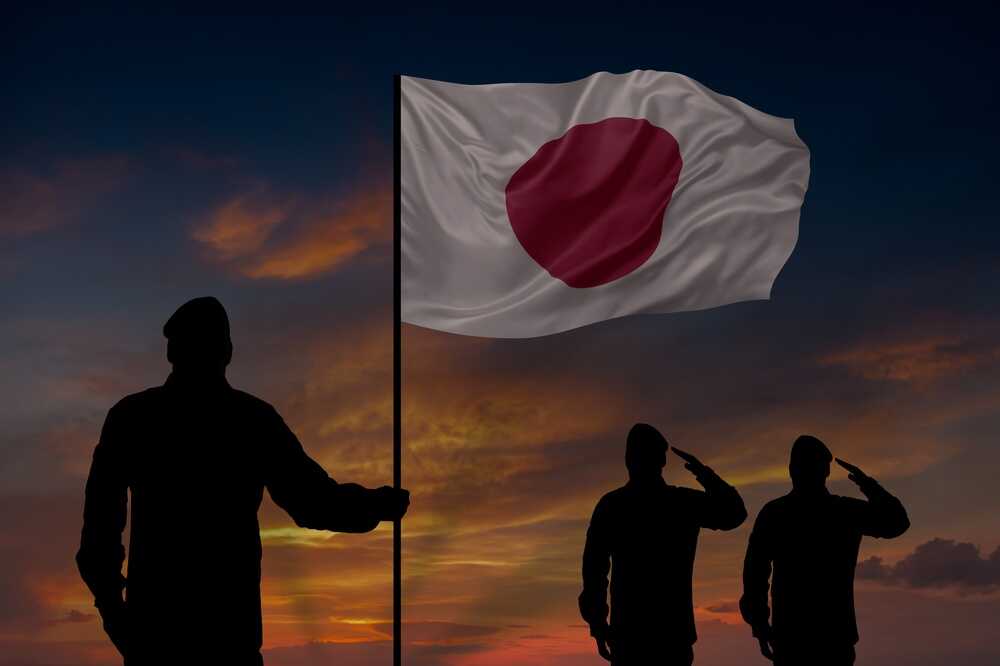
Japan’s secretive deployment of long-range missiles capable of striking China’s eastern seaboard marks a dramatic shift from its post-WWII defensive posture, raising alarms about escalating regional tensions and America’s deepening entanglement in Asia-Pacific military buildups under the Trump administration.
Story Snapshot
- Japan deployed upgraded Type-12 missiles with 1,000 km range at Camp Kengun by March 31, 2026, marking first offensive counterstrike capability
- Missiles can target China’s coastal cities and North Korea from Japanese home islands, deployed one year ahead of schedule
- China’s Defense Ministry condemned the move as abandoning “defense-oriented” pretense, promising “head-on blow” in response
- Deployment relies heavily on U.S. intelligence and surveillance integration, deepening American involvement in potential Asia-Pacific conflicts
- Local Japanese residents protested the secretive overnight transport of missile equipment from Camp Fuji to Kumamoto Prefecture
Strategic Shift Toward Offensive Capability
Japan completed deployment of upgraded Type-12 surface-to-ship missiles at Camp Kengun in Kumamoto Prefecture by March 31, 2026, expanding strike range from 200 kilometers to 1,000 kilometers. Developed by Mitsubishi Heavy Industries, the system represents Japan’s first operational long-range counterstrike capability, enabling strikes on China’s eastern seaboard and North Korea from Japanese territory. The deployment occurred one year ahead of the original schedule, accelerated by Japan’s Ministry of Defense amid escalating tensions over Taiwan and increased Chinese naval activity through the Miyako Strait. Equipment arrived under cover of darkness in early March, sparking protests from local residents concerned about secrecy and potential targeting by adversaries.
The missile deployment fundamentally alters Japan’s security posture established under Article 9 of its post-World War II constitution, which limited the nation to “exclusively defense-oriented” policies. Japan’s 2022 National Security Strategy authorized counterstrike capabilities in response to ballistic missile threats from China and North Korea, marking a constitutional interpretation shift that critics argue crosses into offensive military doctrine. Chief Cabinet Secretary Minoru Kihara confirmed the end-March deployment timeline on March 12, while China’s Defense Ministry spokesperson Jiang Bin accused Japan of abandoning its defensive pretense and warned of consequences for what Beijing characterizes as resurgent militarism threatening regional stability.
Dangerous Dependence on American Intelligence
Analysts from the International Institute for Strategic Studies confirmed the Type-12 system requires extensive U.S. intelligence, surveillance, and reconnaissance support to function effectively, creating what experts describe as “connective tissue” binding Japan’s counterstrike capabilities to American military infrastructure. This dependency means any Japanese missile operation would necessitate direct U.S. involvement through satellite intelligence, radar tracking, and targeting data—precisely the type of entanglement that drags America into conflicts not directly threatening homeland security. From southwestern Japan, the missiles cover all of North Korea and significant portions of China’s coast, while potential future deployments to the Ryukyu Islands would extend range over Taiwan and deeper into Chinese territory, expanding the geographic scope of U.S. military commitments.
The deployment forms part of what defense analysts call an emerging “missile arc” alongside the Philippines’ BrahMos systems and Taiwan’s Hsiung Feng missiles, creating an integrated anti-access/area denial network across the First Island Chain. China’s People’s Liberation Army Daily warned this constitutes a “kill network” aimed at restricting Chinese naval access to the Pacific Ocean through critical chokepoints like the Miyako Strait. Such military infrastructure investments raise fundamental questions about American taxpayer dollars supporting allied buildups that increase risks of confrontation with nuclear-armed China, particularly when Trump promised to prioritize America First principles and avoid new foreign entanglements during his campaign for a second term.
Regional Arms Race and Economic Costs
China responded to the deployment with promises of countermeasures, likely including expanded missile arsenals and targeting of Japanese military installations, fueling an arms race that benefits defense contractors while burdening taxpayers across the Pacific. The secretive nature of the deployment—conducted overnight to avoid public scrutiny—mirrors the lack of transparency Americans experienced with previous administrations’ foreign policy commitments that evolved into open-ended military obligations. Local opposition in Kumamoto Prefecture reflects legitimate concerns about becoming targets in conflicts over disputed territories like the Senkaku Islands, which Japan controls but China claims as the Diaoyu Islands, raising questions about whether treaty obligations should compel American military intervention.
The deployment’s acceleration by one year signals urgency driven by Taiwan contingency planning, as increased Chinese naval transits through the Miyako Strait demonstrate Beijing’s capability to enforce potential blockades. While proponents argue the missiles provide essential deterrence against aggression, the reality is these systems lock America into automatic involvement through required intelligence support, contradicting promises to keep American forces out of conflicts that don’t directly threaten national security. The economic implications extend beyond immediate defense spending to potential trade disruptions and supply chain vulnerabilities if tensions escalate into armed confrontation, impacting American consumers already struggling with inflation from years of fiscal mismanagement and globalist policies prioritizing foreign commitments over domestic prosperity.
Sources:
Asia Times – Japan deploys upgraded Type-12 missiles, spiking China tensions
Global Times – Chinese Defense Ministry response to Japan missile deployment
Stars and Stripes – Japan Type-12 missile deployment
Indo-Pacific Defense Forum – Tokyo deploying domestically developed counterstrike capabilities
Economic Times – Japan’s 1000km Type-12 missile may create kill network