
War Secretary Pete Hegseth just dismantled decades of gun-free zone policies on military bases, finally restoring Second Amendment rights to the very service members trained to defend our Constitution while acknowledging that threats to American troops don’t always come from overseas.
Story Highlights
- Hegseth signed a memo on April 2, 2026, directing base commanders to allow off-duty service members to carry personal firearms, reversing longstanding gun-free zone restrictions
- Policy establishes a presumption in favor of approval for carry requests, requiring written justifications for any denials and aligning with state concealed carry laws
- Hegseth emphasized service members’ “God-given right to self-protection” and warned “not all enemies are foreign,” addressing domestic threats on installations
- Military bases have operated as effective gun-free zones since the 1990s, limiting personal firearms to military police and official duties despite service members’ training
Hegseth Reverses Gun-Free Zone Policy
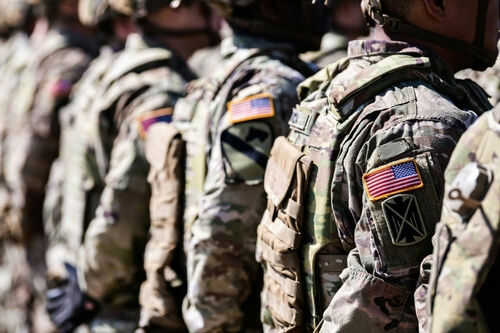
War Secretary Pete Hegseth signed a memorandum on April 2, 2026, directing military installation commanders across the United States to allow uniformed service members to request permission to carry privately owned firearms for personal protection while off-duty on bases. The policy represents a fundamental shift from decades of federal regulations that treated military installations as gun-free zones, restricting concealed carry and firearm storage to military police, security forces, or personnel on official duties. Hegseth announced the change via video on social media platform X, declaring the policy confirms service members’ constitutional rights to self-defense on the installations where they live and work.
Presumption Favors Constitutional Rights
The memorandum establishes a presumption in favor of approving carry requests from service members, fundamentally changing the approval process that previously made personal firearm carry “virtually impossible” except for designated security personnel. Installation commanders must now process requests with an expectation of approval, aligning decisions with applicable state concealed carry laws where bases are located. Any commander choosing to deny a request must provide a written explanation justifying the decision. This requirement creates accountability and prevents arbitrary denials of constitutional rights, addressing longstanding frustrations among service members who possessed extensive firearms training yet faced more restrictions than civilians living off-base in states with robust Second Amendment protections.
Addressing Domestic Threats on Installations
Hegseth framed the policy change as a response to growing concerns about threats on military installations, emphasizing that service members face vulnerabilities despite their training and capabilities. He stated the policy confirms “your God-given right to self-protection” and notably declared “not all enemies are foreign,” acknowledging domestic threats including potential insider attacks and violent incidents that have occurred on bases. The policy applies specifically to Department of War property in the United States for personal protection in a non-official duty capacity. Rising concerns over domestic violence, insider threats, and the reality that service members tasked with defending others’ freedoms were paradoxically denied their own Second Amendment rights drove the reform, which aligns with broader changes Hegseth has implemented since his appointment.
Breaking Decades of Federal Overreach
Military bases have operated under gun-free zone policies stemming from post-1990s security regulations that emphasized centralized control following incidents like the 1992 Fort Bragg shooting. These restrictions persisted even as state-level concealed carry laws expanded dramatically across the country, creating a glaring inconsistency where highly trained military personnel faced more restrictive policies than civilians with basic carry permits. Similar proposals emerged after the 2013 Washington Navy Yard shooting but were never implemented federally, leaving service members defenseless in their own living quarters and daily base activities. The new policy could set a precedent for other federal facilities beyond military installations, potentially influencing how the government approaches Second Amendment rights in high-security environments where armed, trained Americans should logically possess enhanced rather than diminished constitutional protections.
Implementation and Immediate Impact
The policy directs installation commanders to begin processing carry requests immediately, though specific disqualification criteria such as disciplinary history or mental health concerns remain unclear in initial reporting. Service members can now submit requests for off-duty carry privileges, with commanders balancing security oversight against the presumption favoring approval. The change represents both a cultural shift toward armed self-defense on bases and a practical enhancement potentially reducing response times to active threats. Short-term effects include increased administrative processing of carry requests, while long-term implications involve fundamentally altering the security culture on installations to recognize that armed, responsible service members enhance rather than diminish safety. This reform demonstrates how constitutional principles can prevail over bureaucratic risk-aversion when leadership prioritizes the rights and security of those who serve.
Sources:
Pete Hegseth signs memo opening door for troops to carry personal firearms on bases – WFMD
Pete Hegseth signs memo opening door for troops to carry personal firearms on bases – Fox News
Service members can now carry personal weapons on military bases, Hegseth says – KTVU
Hegseth Authorizes Off-Duty Service Members to Carry Private Firearms on Installations – War.gov