

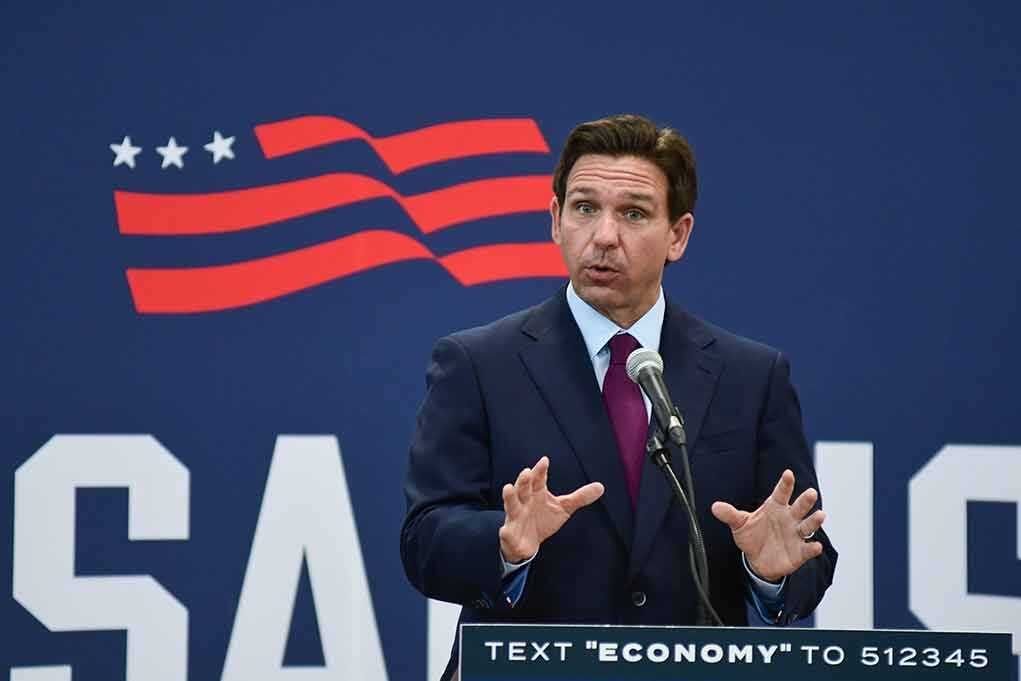
Florida Governor Ron DeSantis is defending the Electoral College as Democrats talk about scrapping it, arguing the system stops big blue states from calling all the shots.
Story Snapshot
- DeSantis says the Electoral College forces candidates to win support across many states, not just big cities.
- The Constitution gives each state electors based on its House and Senate seats, making states the building blocks of presidential elections.
- Critics, including National Popular Vote and the Brennan Center, say the system actually shrinks the power of most small and safe states.
- The fight comes as Democrats openly discuss ending the Electoral College after recent election results.
DeSantis Warns Against Letting Big Cities Decide Elections
Governor DeSantis argues the Electoral College keeps presidential elections fair by spreading power across the whole country. He says the system “ensures that all states have a say in electing the president” and stops any candidate from simply “running up the score in one region of the country”. His warning comes as Democrats increasingly float the idea of switching to a straight national popular vote.
DeSantis points to cities like New York, Boston, Chicago, San Francisco, and Los Angeles as places that could dominate a national vote count. He argues a popular-vote system would let candidates ignore most of the country and focus only on racking up huge numbers in a handful of liberal strongholds, leaving smaller and rural states with almost no voice in choosing the president.
The Constitution Built Elections Around States, Not One National Count
The Constitution backs up this federalism argument directly. Article II, Section 1 says each state picks electors equal to its total number of senators and representatives, not through one combined national tally. That means states themselves, not a single nationwide pool of voters, are the formal building blocks of how America picks a president.
This setup traces back to the nation’s founding. The U.S. Election Assistance Commission notes that smaller states feared being steamrolled by larger, more populous states when the Constitution was written. The Electoral College grew out of the same large-state, small-state compromise that shaped the entire structure of Congress. Every state, no matter how small, gets at least three electoral votes because of its two guaranteed Senate seats.
Critics Say Small States Already Get Ignored
Not everyone buys the small-state protection argument. National Popular Vote, a group pushing to replace the Electoral College, says the current winner-take-all system actually wipes out small states’ influence because campaigns only chase closely divided battleground states, not small ones. The group argues a ballot cast in Wyoming or Vermont should count exactly the same as one cast in Florida or California.
The Brennan Center backs up part of that claim with hard numbers. During the 2016 campaign, two-thirds of all general-election campaign stops happened in just six states: Florida, North Carolina, Pennsylvania, Ohio, Virginia, and Michigan. Small states and even giant states like New York, Texas, and California were largely skipped over by candidates chasing electoral votes.
The Brennan Center also points out that the system gives residents of small states more voting power per person than residents of big states, since every state gets two electors tied to its senators regardless of population. That math cuts both ways. It proves DeSantis’s point that no single region controls the outcome, while also fueling critics’ argument that votes aren’t weighed equally from state to state.
A Fight With Deep Historical Roots
This isn’t the first time the Electoral College has sparked a national fight. The system has produced a mismatch between the popular vote and the Electoral College winner four times in American history, including the disputed 1876 race between Samuel Tilden and Rutherford B. Hayes, and more recently in 2000 and 2016. Each time, the losing side has questioned whether the system still serves the country fairly.
Governor DeSantis also argues that keeping elections organized state by state limits the mess during a close race, since each state runs and certifies its own vote count instead of one giant national recount. Whether that argument wins over skeptics or not, the debate shows no sign of fading as Democrats keep pushing to scrap a system written into the Constitution more than two centuries ago.
DeSantis to Buttigieg: No Thanks to a Month of California Counting Chaos
Pete Buttigieg just told Jen Psaki the Electoral College “makes no sense” and is nothing more than leftover “arcane, parochial politics in the 1770s.” He wants it gone so the candidate with the most raw… pic.twitter.com/cYqgKtaFYs
— Sami Nathaniel (@NathanielSami) November 15, 2026
For conservatives, the stakes go beyond vote-counting mechanics. The Electoral College forces presidential candidates to build coalitions across red, blue, and purple states alike, rather than simply maximizing turnout in a few liberal megacities. DeSantis’s defense taps into a core conservative worry: that scrapping constitutional guardrails designed to protect smaller and rural states would hand permanent power to the nation’s biggest, most left-leaning urban centers.
Sources:
redstate.com, libertyonenews.com, beforeitsnews.com, archives.gov, eac.gov, nationalpopularvote.com