
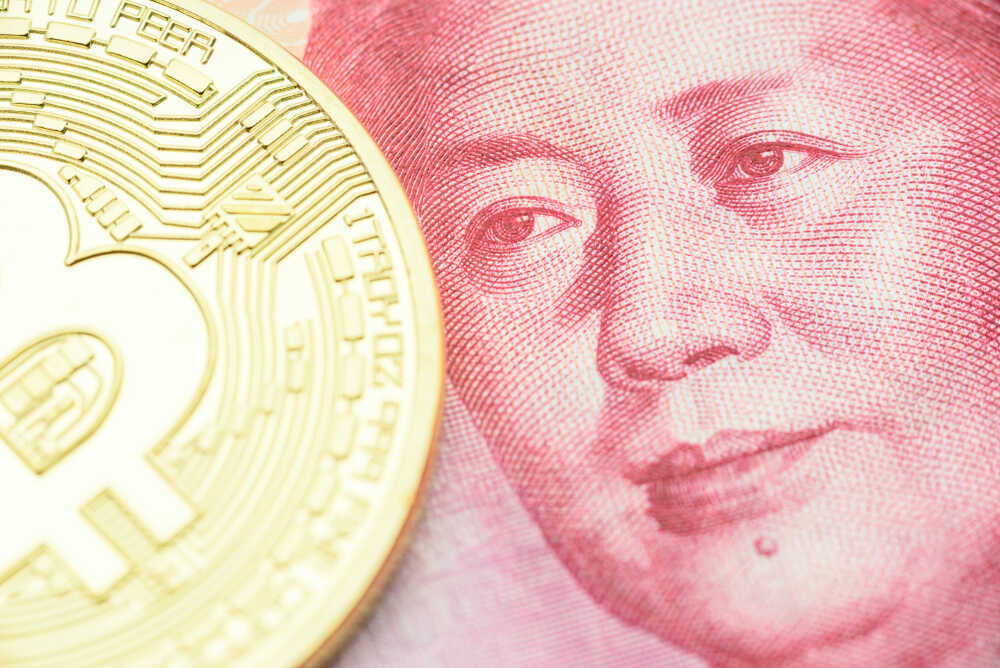
China Expands Crypto Crackdown Overseas
China just drew a hard line on digital money—warning the world that any private yuan “stablecoin” outside Beijing’s control will be treated like an illegal financial operation.
Story Snapshot
- China’s central bank and seven other agencies issued a joint ban on unapproved yuan-pegged stablecoins and tokenized real-world assets (RWAs).
- The prohibition applies to domestic and foreign entities and explicitly reaches offshore issuance tied to China.
- Regulators framed these products as illegal “fiat mimics,” citing anti-money laundering and capital-control concerns.
- The policy reinforces the state-backed digital yuan (e-CNY) as the only sanctioned digital version of the yuan.
Beijing Expands Its Crypto Crackdown Beyond Its Borders
China’s People’s Bank of China (PBOC), alongside seven other government agencies, announced that unauthorized issuance of yuan-pegged stablecoins and tokenized RWAs will be treated as illegal financial activity. The scope matters: it targets both domestic and foreign entities and extends to offshore issuance connected to China. The move follows earlier crypto restrictions and signals that Beijing intends to keep tight control over anything that functions like money.
Reports indicate the policy trajectory hardened through 2025. Market chatter about potential openings for private yuan stablecoins surfaced mid-year, then regulators reportedly ordered trial activity to stop by September. Separate reporting also described a prior step in March 2025: a ban on overseas issuance of yuan-backed stablecoins without approval. The latest joint declaration formalizes a broader, more explicit position with enforcement teeth.
Stablecoins and RWAs Treated as “Fiat Mimics” the State Won’t Tolerate
Chinese regulators’ core argument is straightforward: a private token pegged to the yuan behaves like currency while bypassing state permission and compliance controls. In official messaging cited across coverage, stablecoins were criticized for failing to meet anti-money laundering expectations and for enabling illicit transfers. By bundling stablecoins with tokenized RWAs, Beijing is also signaling it does not want private platforms creating parallel markets for claims on real assets.
The government’s approach reflects a broader philosophy that conservatives in the U.S. will recognize—only inverted. Where Americans often push for individual choice, competition, and checks on centralized power, Beijing is building a system where the state is the gatekeeper for money, transactions, and the data those transactions generate. The practical takeaway is that China is not merely “regulating crypto”; it is protecting a monopoly over digital money rails.
The e-CNY Is the Point: Programmable Money With Built-In Oversight
Multiple reports tie the crackdown directly to strengthening the state-backed digital yuan (e-CNY). Beijing has expanded e-CNY pilots and promoted features that encourage adoption through the banking system. The stablecoin ban reinforces the message that the only authorized digital representation of the yuan is the one issued and monitored by the Chinese state. From a governance standpoint, this consolidates control over payments, surveillance capabilities, and enforcement of capital controls.
That contrast matters for Americans watching the global trend toward central bank digital currencies (CBDCs). The China model shows how quickly “efficiency” arguments can merge with enforcement priorities. The research also notes uncertainty around the exact timing of the most recent formal notice versus earlier announcements, but the direction is consistent: no credible evidence suggests approvals are coming, and the posture remains “zero tolerance” for private crypto alternatives.
Global Ripple Effects: Offshore Issuers, Hong Kong Divergence, and Dollar Competition
In the short term, the ban shuts down momentum for yuan-stablecoin projects and forces any would-be issuers to avoid China-linked operations altogether. In the long term, it signals that Beijing will try to prevent private instruments from weakening capital controls or competing with e-CNY. The research also highlights a regional split: Hong Kong has pursued a more permissive licensing approach, while mainland China tightens restrictions, underscoring that “China policy” is not uniform across jurisdictions.
China Bans Stablecoin Issuance By Foreign And Domestic Companies https://t.co/WtOL91tMyI
— zerohedge (@zerohedge) February 7, 2026
For U.S. readers, the broader lesson is that stablecoins and tokenization are now firmly in the crosshairs of national-security-style financial policymaking worldwide. China’s move is framed as monetary sovereignty and compliance, but it also demonstrates how digital finance can be used to centralize power. Limited details are available on which specific entities may be penalized, yet the public warning is clear: if it looks like currency and isn’t state-approved, Beijing will treat it as a crime.
Sources:
China Bans Unapproved Yuan-Pegged Stablecoins and Tokenized RWAs
China yuan stablecoin ban overseas
China central bank reaffirms commitment to digital asset ban
China crypto crackdown flow capital liquidity
China cracks down on crypto, overseas issuance banned
Why China Spooked Dollar Stablecoins—and How It Will Respond