
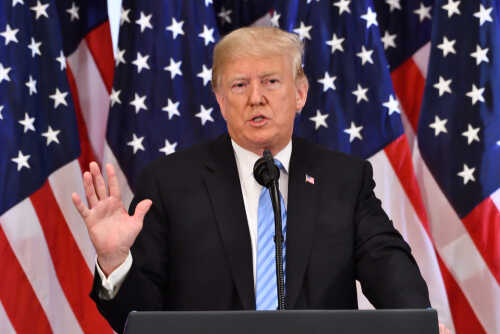
President Donald Trump has debuted a new global peace initiative, the “Board of Peace,” at the World Economic Forum in Davos, a move that directly challenges the authority and future role of the United Nations. Originating from his 2025 Gaza ceasefire plan, the Board has quickly expanded its mandate to include broader international conflict resolution, securing commitments from 35 nations—including controversial members like Russia—and requiring a significant $1 billion membership contribution.
Story Snapshot
- The Board of Peace, signed by Trump at Davos, offers a UN alternative.
- 35 nations have committed, with a $1 billion membership fee required.
- Criticism arises over the inclusion of controversial nations like Russia.
- Trump’s permanent chairmanship ensures his continued influence.
Trump’s Vision for Global Peace
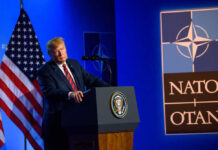
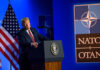
On January 22, 2026, President Donald Trump signed the charter for the Board of Peace at the World Economic Forum in Davos. This initiative, a potential alternative to the United Nations, was designed to address conflicts that the UN has been unable to resolve. Originating from Trump’s 2025 Gaza ceasefire plan, the Board has expanded to include global conflict resolution, with 35 nations committed to joining. Notably, the Board requires a $1 billion contribution for permanent membership, positioning it as a significant player on the world stage.
The Board of Peace includes both traditional allies and controversial nations such as Russia and Belarus. This mix has prompted skepticism from some European countries, including France, Norway, and Sweden, which have expressed reservations about joining. The Board’s formation reflects Trump’s departure from traditional diplomacy, as he emphasizes his administration’s success in ending multiple international conflicts without the UN’s involvement.
#BREAKING Trump signs founding charter of 'Board of Peace' at Davos pic.twitter.com/D2UAoNpbsK
— AFP News Agency (@AFP) January 22, 2026
Reactions and Criticism
Secretary of State Marco Rubio highlighted the Board’s potential to rectify UN failures, praising Trump for his vision and courage. Despite this support, several European allies remain hesitant. The UK declined to sign the charter, citing concerns about Russia’s invitation. Major powers like Germany and Italy have yet to commit, reflecting the diplomatic challenges facing the Board.
Critics argue that the $1 billion membership fee could create a financial hierarchy, favoring wealthy nations and excluding developing countries. Additionally, some question the Board’s legitimacy, especially given its lack of direct reference to Gaza in its charter, despite the initiative’s origins in the Gaza ceasefire plan.
Trump’s permanent chairmanship ensures his influence over future peacekeeping efforts, a point of contention among those wary of concentrating such power in the hands of a single individual. The Board’s success will heavily depend on its ability to implement effective peace strategies and gain broader international acceptance.
The Future of International Conflict Resolution
As the Board of Peace becomes an official international organization, its legitimacy and effectiveness remain under scrutiny. Trump’s suggestion that the Board could potentially replace the UN signals a major shift in global governance, raising questions about the UN’s future role. The Board’s impact on international conflict resolution will depend on its ability to address global issues while navigating geopolitical complexities.
Trump’s initiative marks a bold attempt to reshape international diplomacy, with the potential to redefine how peace is brokered worldwide. The Board’s future success will hinge on its capacity to deliver tangible results, particularly in regions like Gaza, where humanitarian aid and reconstruction efforts are urgently needed.
Watch the report: A New World Order? Trump’s Alternative to the UN | Vantage with Palki Sharma | N18G
Sources:
Israel Hayom: Trump Launches Board of Peace Initiative
ABC News: Trump Plans Signing Ceremony at Davos
Euronews: Trump Launches Board of Peace at Davos
CBS News: Trump Board of Peace at Davos