
Iran’s Strait of Hormuz “freeze” is already hitting Americans where it hurts—by pushing oil prices higher and reviving the inflation pressure families thought they’d finally outrun.
Quick Take
- Brent’s premium over Dubai crude blew out above $6 per barrel, the widest spread since 2022, as Gulf exports became harder to move and price.
- Tanker traffic through the Strait of Hormuz plunged toward a near standstill amid Iranian threats and attacks, with hundreds of vessels reportedly idling.
- Oil jumped into the low-to-mid $80s per barrel in days, while analysts warned prolonged disruption could push prices toward $100.
- The U.S. has not indicated an immediate Strategic Petroleum Reserve release, even as higher energy costs threaten renewed consumer inflation.
Markets Price a “Paper Shortage” Before the Real One
Traders reacted fastest in the gap between Brent futures and Dubai swaps, a key gauge for Atlantic Basin crude versus Middle East supply. That spread surged above $6 per barrel after sitting under $2 before the conflict escalated. Brent climbed into roughly the $83–$84 range while Dubai stayed closer to $68, signaling that Gulf barrels were becoming stranded or difficult to price as normal shipping patterns broke down.
The disconnect matters because it shows how risk gets priced before many Americans see physical shortages at the pump. When shipping lanes look unsafe or insurers reprice war risk, buyers bid up “safer” or more accessible crude first. Dubai’s patchy trading also points to a practical problem: if fewer cargoes move and fewer deals print, price discovery weakens, and uncertainty itself becomes a premium that ultimately travels down the chain.
Hormuz Is a Chokepoint—And Iran Knows It
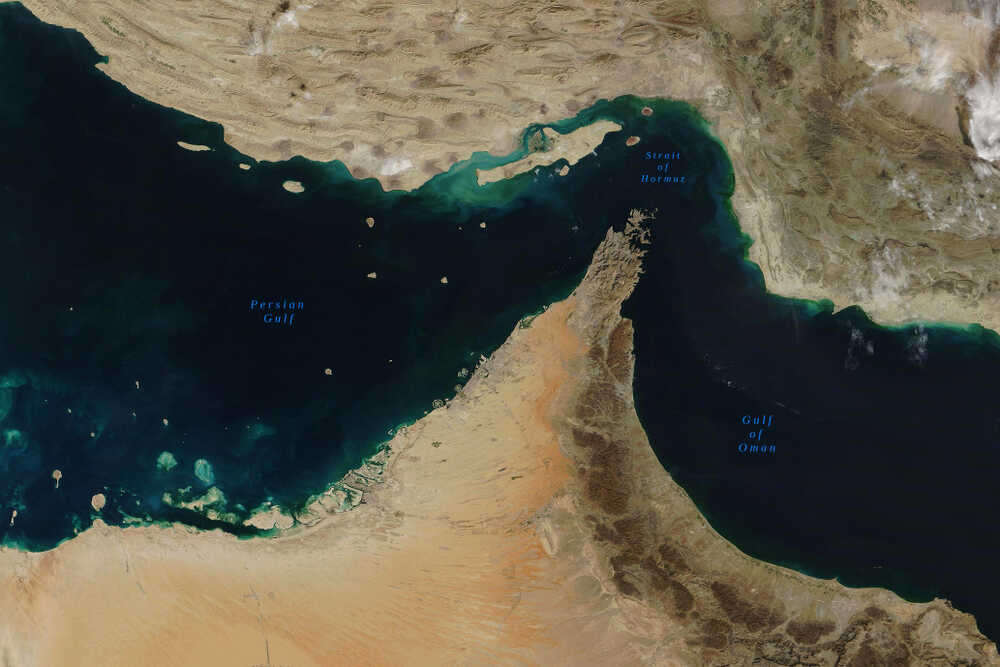
The Strait of Hormuz is only about 21 miles wide at its narrowest, yet it carries a massive share of global seaborne oil trade—often summarized around one-fifth of the world’s seaborne crude and large volumes of LNG. Research tied to 2024 shipments shows most of that crude and condensate headed to Asia, with China, India, Japan, and South Korea among the biggest stakeholders, meaning disruption hits import-dependent economies first.
Recent reporting described tanker traffic collapsing as the Iran conflict intensified, with estimates ranging from an initial steep drop to an even deeper halt approaching near-zero movement. The research also described attacks on vessels and strikes tied to regional energy infrastructure, plus a buildup of idling ships outside the strait. One key uncertainty remains: the situation has been described as a “freeze” or an effective closure rather than a formally declared blockade, but the market impact has looked similar.
Supply Chain Stress Spreads From the Gulf to Your Grocery Bill
The near-term impact shows up in price spikes and higher transport costs. Reports cited surging freight rates and war-risk insurance, which function like an extra tax on every barrel that does move. Research also described disruptions affecting LNG and industrial gas in parts of the region and Asia. When energy becomes more expensive, everything that depends on transport, refrigeration, and petrochemical inputs gets costlier—feeding the inflation cycle that frustrated voters during the previous administration.
Analyst expectations in the research converged around a simple duration test: if disruption persists beyond a couple weeks, producers face storage constraints and may be forced into shut-ins, while importers compete harder for non-Gulf supply. Several banks and market commentators flagged scenarios where crude could trade toward $100 per barrel if the disruption becomes prolonged. That is not a guarantee, but it explains why markets are paying up now rather than waiting for inventories to visibly drain.
Geopolitics Collide With Policy Choices in Washington
The research indicated the U.S. was not immediately tapping the Strategic Petroleum Reserve as this developed, even as higher crude prices raise the odds of hotter headline inflation. For a country that just lived through years of elevated prices, the political sensitivity is obvious. Elevated energy costs also complicate the interest-rate outlook, because central banks hesitate to cut when inflation risks reappear, and that can keep borrowing costs higher for mortgages, autos, and small businesses.
Brent’s premium to Dubai has blown out above $6/bbl, up from under $2 last week, the widest since 2022. Brent trades $83–$84 while Dubai lags near $68. With Hormuz traffic frozen, the market is pricing disruption fast. #Oil #Brent #Dubai #Hormuz #OOTT https://t.co/GXNq4vkqsj
— OilPrice.com (@OilandEnergy) March 3, 2026
OPEC+ had already been discussing a modest output increase, but a Hormuz-scale disruption is not a normal supply hiccup—it is a chokepoint shock. Meanwhile, China was described as pressing Iran to keep the route open, reflecting how exposed Asian buyers are to Gulf flows. For American families, the takeaway is straightforward: even when the crisis is overseas, the bill can land at home fast, especially when global shipping is disrupted.
Sources:
Hormuz Freeze Sends Brent-Dubai Spread to Multi-Year High
Strait of Hormuz: India crude oil exports
Standard Chartered increases Brent 2026 forecasts in response to Middle East turmoil