
California Governor Gavin Newsom staged a photo op aboard a conventional diesel freight train to promote a high-speed rail project that has burned through $15 billion over nearly two decades without laying a single mile of actual high-speed track—a stunt critics say epitomizes government waste and political deception aimed at propping up his 2028 presidential ambitions.
Story Snapshot
- California’s high-speed rail has consumed $15 billion since 2008 with zero miles of operational high-speed track, costs ballooning from $33 billion to over $128 billion for a drastically reduced segment
- Newsom’s recent Central Valley photo op used a diesel train on conventional track to falsely suggest progress, while state inspector general reports slam the Merced-Bakersfield phase alone at $35.3 billion—exceeding the original full-system estimate
- Trump administration terminated $4.2 billion in federal funding in July 2025 after deeming the 2033 completion deadline unfeasible, prompting Newsom’s lawsuit to recover taxpayer dollars
- The scaled-down 171-mile rural connector between Merced and Bakersfield faces plummeting ridership forecasts and serves cities with a combined population under 500,000, offering no major metropolitan links
- State legislature plans to allocate another $20 billion despite California’s budget deficits, locking taxpayers into a project critics label a “train to nowhere” driven by sunk-cost politics
Two Decades of Empty Promises and Ballooning Costs
California voters approved Proposition 1A in 2008, authorizing $9.95 billion in bonds for a promised Los Angeles-to-San Francisco high-speed rail system projected to cost $33 billion and operate by 2020 with trains exceeding 200 mph. Nearly two decades later, the project has spent $15 billion with zero miles of high-speed track laid and costs skyrocketing to at least $128 billion for a drastically reduced 171-mile segment connecting Merced to Bakersfield—two small Central Valley cities. Track-laying has been delayed until possibly early 2027, missing every deadline and betraying the transformative vision sold to taxpayers.
Newsom’s Diesel Train Deception and Political Theater
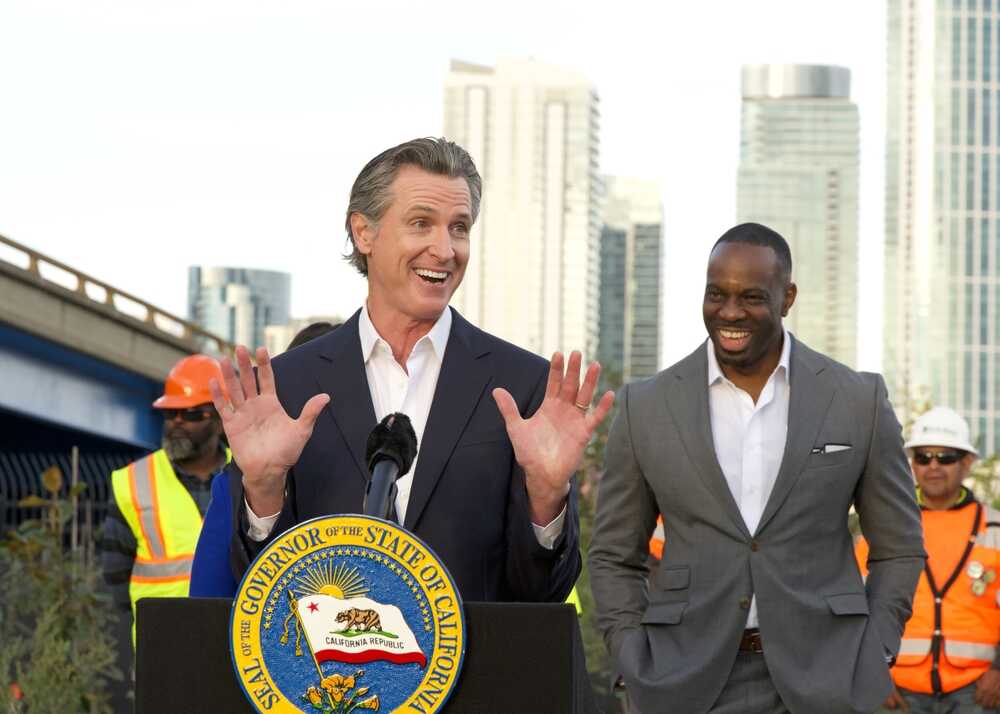
Governor Newsom recently toured the Central Valley and held his State of the State address touting “structures” and “family-sustaining wages,” staging a photo op aboard a conventional diesel freight train on existing track to create the illusion of progress. Critics exposed the ruse, revealing empty concrete viaducts built at enormous expense with no high-speed rail infrastructure in sight. Carl DeMaio of Reform California blasted the move as “insidious,” designed to perpetuate the boondoggle and avoid admitting failure while Newsom eyes a 2028 presidential run. This grandstanding ignores a scathing state inspector general report showing the Merced-Bakersfield phase alone costing $35.3 billion—more than the original estimate for the entire LA-to-SF system—and ridership projections collapsing by 25 percent.
Federal Funding Cut and Taxpayer Revolt
In July 2025, the Trump administration’s Transportation Secretary Sean Duffy terminated $4.2 billion in federal funding after the Federal Railroad Administration concluded the California High-Speed Rail Authority could not meet its 2033 Merced-Bakersfield operations commitment. Newsom sued to restore the funds, dragging taxpayers into costly litigation to chase a project Senator Ted Cruz and others have condemned as “frivolous waste.” The rescinded federal money represented a significant blow to a venture already hemorrhaging state resources amid California’s budget deficits and ongoing resident exodus. The decision underscores federal skepticism toward a venture plagued by environmental hurdles, mountain routing challenges, and minimal demand between rural destinations lacking transit infrastructure—leaving future riders with absurd options like “Uber to Wasco.”
Locking Taxpayers Into Sunk-Cost Politics
Despite overwhelming evidence of failure, California’s legislature is planning to allocate an additional $20 billion to the project, a move financial analyst Steve Forbes called “pure fantasy” and “reckless.” The sunk-cost fallacy has trapped decision-makers: with $15 billion already spent, admitting defeat feels politically untenable, so leaders double down, pouring good money after bad. Taxpayers face a final bill potentially exceeding $1 billion per mile for a rural connector offering no service to Los Angeles or San Francisco, the state’s economic engines. The wasted resources could have funded the equivalent of 200 round-trip flights per California resident or built ten aircraft carriers, highlighting the staggering opportunity cost of government overreach and fiscal mismanagement masquerading as visionary infrastructure.
This debacle serves as a textbook warning against optimistic government projections and the political manipulation of taxpayer dollars. Newsom’s diesel train stunt symbolizes a broader betrayal: promising innovation while delivering empty viaducts, promoting regional growth while cities hemorrhage residents, and chasing national political glory atop a monument to waste. Conservatives rightly demand accountability for projects that erode fiscal responsibility and trap citizens in debt for generations, undermining the limited-government principles essential to prosperity and freedom.
Sources:
Grandstanding Newsom will stop at nothing to ride the rails to glory in 2028 – Fox News Opinion
DeMaio Blasts Newsom on Keeping High Speed Rail Boondoggle Alive – Reform California
California Doubles Down on a Boondoggle – R Street Institute