
Nancy Pelosi condemned a Democratic Senate hopeful’s stance on Israel as “wrong,” then scrambled to reassure party unity days before voters decide.
Story Highlights
- Nancy Pelosi said Abdul El-Sayed’s Israel position is “wrong” and not representative of Democrats in Congress.
- El-Sayed’s campaign disavowed a separate outside ad tying grocery costs to U.S. support for Israel.
- The ad’s language sparked backlash over blaming Israel for American inflation.
- Pelosi’s office later said she still supports El-Sayed on core domestic priorities.
Pelosi’s On-Record Rebuke And Rapid Clarification
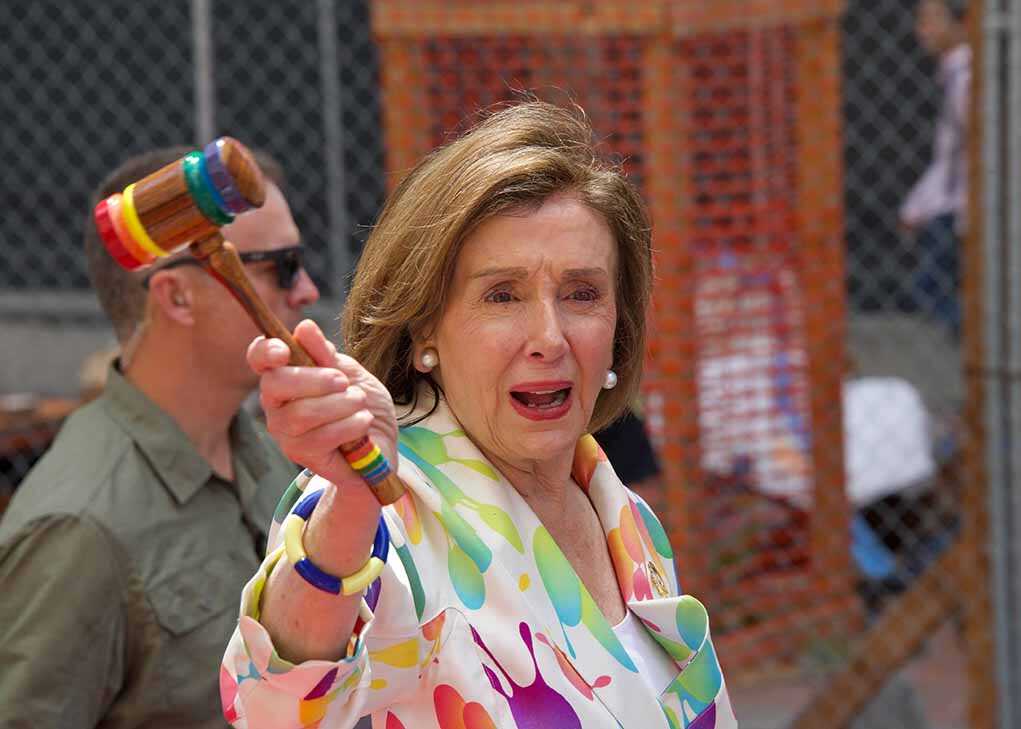
On October 30, 2026, Nancy Pelosi said a disputed claim about Israel’s right to be a Jewish state is “more than concerning. It’s wrong,” and “isn’t a reflection of the Democrats in the Congress of the United States,” during an On Brand podcast interview. The New York Times reported the question named Zohran Mamdani and Abdul El-Sayed. After the comment drew fire, Pelosi’s spokesperson said she still supports El-Sayed’s candidacy on lowering costs, health care, and defending democracy, despite disagreements.
Coverage summarized Pelosi’s stance as a clear split with El-Sayed’s approach on Israel while stressing party unity in the final stretch before Election Day. Times of Israel highlighted the rebuke, quoting Pelosi’s “wrong” characterization and her contrast between the candidate’s view and House Democrats. The episode underscored a late-campaign scramble for message discipline as Democrats tried to contain intraparty rifts on Israel that risk alienating key voters and donors in battleground Michigan.
Outside Ad Ties Israel To Prices, Campaign Disowns It
An outside group, Rebellion Political Action Committee, aired an ad linking high grocery bills to U.S. aid for Israel. The spot featured a couple saying they set aside money “for killing Palestinians,” drawing sharp criticism for suggesting Israel, or Jews, are to blame for American hardship. El-Sayed’s campaign said the ad was “not affiliated in any way” and does not speak for him. Fortune reported Democrats rushed joint events to limit damage in the race’s final days.
Jewish and mainstream outlets described the ad as inflammatory and antisemitic in tone, intensifying pressure on El-Sayed to reject it and clarify his own views. Times of Israel noted El-Sayed distanced himself from the ad and criticized its message. USA Today reported Jewish leaders pressed El-Sayed to condemn such ads outright, showing how outside spending can warp a campaign’s message and create guilt by association close to Election Day. The ad’s sponsor, not the campaign, controlled the content.
What El-Sayed Has And Has Not Said On Israel
Reports say El-Sayed has repeatedly declined to affirm Israel’s right to exist as a Jewish state, while framing his view around equal rights and self-determination for both peoples. At a May event, he said he “struggles” with the question because it forces a definition of a “Jewish state,” and he pushed back that no one asks about Palestine’s right to exist, since it does not exist as a state today. The record does not show him stating that Israel lacks any right to exist, creating room for debate.
PolitiFact reported El-Sayed calls Israel’s conduct in Gaza “genocide,” describes West Bank policies as “apartheid,” and argues U.S. aid undermines a two-state solution by backing leaders who oppose it. Analysts describe three Democratic camps on Israel, with a smaller left faction invoking genocide or apartheid and opposing military aid, while establishment figures defend the alliance but criticize policies. That split made Pelosi’s claim about what “Democrats in Congress” believe hard to benchmark without votes or surveys.
Why This Matters For Voters Focused On Security And Stability
Voters who want stability, strength with allies, and moral clarity see two clashing signals. Pelosi rejected a controversial framing of Israel’s legitimacy as outside the congressional mainstream, even as she urged unity to win and “lower costs.” Outside money then pushed an ad that pinned inflation on Israel, which El-Sayed disowned. The mess shows how activist rhetoric and dark-money ads can hijack a race, distract from kitchen-table issues, and blur a candidate’s real record.
For conservatives, the lesson is plain. Outside groups can flood the zone with divisive ads, stoke identity fights, and drown out real solutions on energy, spending, and border security. Democrats remain split on Israel and national security, which invites mixed signals when the stakes are highest. President Trump’s administration continues to stress peace through strength, a strong alliance with Israel, and clear lines against terror. Voters will judge who delivers stability—and who flinches when it counts.
Sources:
twitchy.com, fortune.com, nytimes.com, thejewishnews.com, timesofisrael.com, politifact.com, yahoo.com, washingtonmonthly.com, jewishinsider.com, inss.org.il