

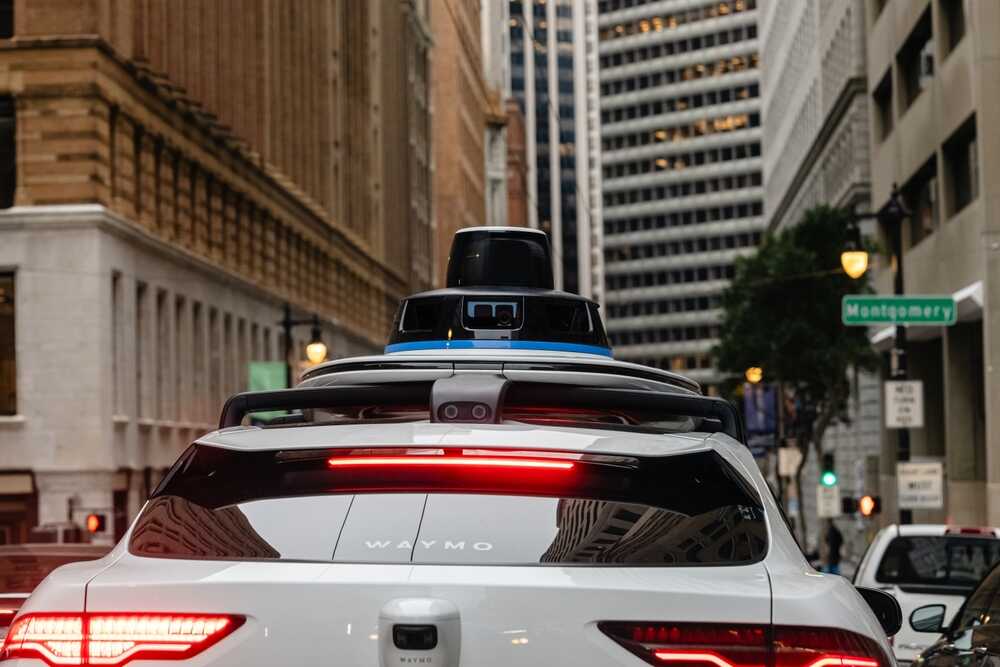
A driverless taxi that can drive away with your luggage—and leave you stranded at the airport—hits a nerve for travelers who were promised “safer than humans” autonomy.
Quick Take
- A San Jose passenger said a Waymo robotaxi left him at Mineta San Jose International Airport without his luggage after the vehicle drove off.
- Coverage frames the incident as a customer-service and safety failure, not just a tech glitch, because it involves travel timing, property, and personal security.
- The story is fueling a familiar public debate: rapid deployment of high-tech systems versus accountability when something goes wrong.
- Public details remain limited based on the research provided here; key claims are reported through local and tabloid coverage and a related YouTube segment.
What the passenger says happened at San Jose’s airport
Reporting centered on a South Bay passenger who said he used a Waymo ride to get to Mineta San Jose International Airport and ended up separated from his luggage. According to the accounts highlighted in local coverage and a widely shared tabloid write-up, the rider claimed the vehicle drove off after he got out, leaving his bags behind and putting him in a position many travelers recognize: limited time, limited options, and no clear person in charge.
The most immediate stakes in the story aren’t abstract debates about AI; they’re practical and personal. A traveler who loses access to luggage can lose medication, IDs, work devices, or a firearm stored legally for travel. The “it’s not my mistake” framing in social chatter reflects a broader consumer expectation: when a paid transportation service fails, the customer should not be forced to absorb the financial and logistical damage while navigating automated phone trees.
Why this is more than a one-off “glitch” for public trust
Autonomous vehicles sell reliability as a core feature—consistent rules, consistent performance, fewer human errors. Incidents like this cut in the opposite direction because they look like a systems failure that cannot be reasoned with on the curb. Even if rare, the scenario is easy to imagine and hard to dismiss: the rider is outside the car, the property is inside the car, and the “driver” is software. That gap is exactly where trust breaks.
For conservatives skeptical of elite-driven tech mandates, the political friction is familiar. When institutions push adoption first and sort out liability later, the public ends up acting as the test bed. At the same time, liberals who worry about inequality have their own angle: if the only effective recourse requires time, legal knowledge, or persistent escalation, then ordinary working people take the hit while well-connected customers get faster fixes. Both sides end up at the same demand—clear accountability.
Accountability questions regulators and lawmakers can’t keep dodging
The reported facts raise policy questions that elected officials cannot wave away as “innovation pains.” If a robotaxi leaves with property, what is the required response time? Who has authority to remotely stop and recover the vehicle? What documentation must a customer receive immediately to file claims or catch a flight?
What to watch next: standards, liability, and consumer protections
Stories like this typically become a test of whether government works for regular people or for powerful interests. If autonomy is going to expand in major metro areas, standards need to be written in plain English and enforced consistently: clear custody rules for lost property, auditable logs that passengers can access, and penalties when companies fail to resolve issues quickly. Without that, promises of “the future” will keep colliding with a basic American expectation—service providers must be accountable.
Runaway Waymo that dropped passenger at California airport is every traveler’s worst nightmare: ‘It’s not my mistake’ https://t.co/jA2EMcTfge via @nypost
— Chris 🇺🇸 (@Chris_1791) May 2, 2026
For travelers, the practical takeaway is simple: autonomous convenience is only as good as the recovery plan when something goes sideways. Until the public sees transparent procedures—and fast restitution when customers are harmed—every airport drop-off becomes a moment of doubt. That doubt doesn’t just slow adoption; it intensifies a broader, bipartisan suspicion that modern systems are designed to protect institutions first and citizens last.
Sources:
Waymo leaves passenger at California Airport without …
San Jose passenger claims a Waymo drove off with his …