

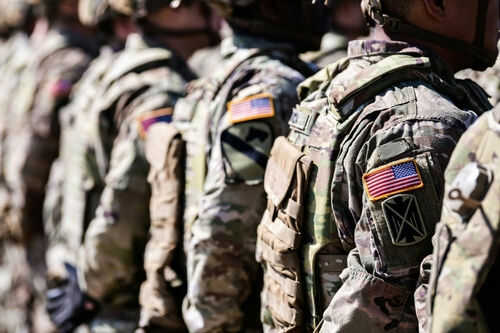
Trump just put NATO on notice: if wealthy allies won’t back America in a crisis, U.S. troops may no longer be guaranteed on their soil.
Quick Take
- President Trump said he would “probably” consider pulling U.S. troops from Italy and Spain after criticizing their lack of support during the U.S.-Israeli conflict with Iran.
- The comments followed his announcement that the administration is reviewing a potential reduction of U.S. forces in Germany.
- As of late 2025, the U.S. troop footprint included about 36,436 in Germany, 12,662 in Italy, and 3,814 in Spain—numbers that shape deterrence, logistics, and local economies.
Trump’s Italy and Spain Warning Tied Directly to Iran Conflict Fallout
President Donald Trump told reporters on April 30, 2026, that he would “probably” consider pulling U.S. troops from Italy and Spain, framing the issue as payback for allies he said refused to help during the recent U.S.-Israeli air conflict with Iran. Trump’s remarks came during an Oval Office exchange and included harsh characterizations of both countries’ support. The immediate trigger, according to the reporting, was allied reluctance amid an escalating regional crisis tied to the Strait of Hormuz disruption.
Trump’s language matters because it ties basing decisions to alliance behavior in a specific emergency, not just to long-running burden-sharing complaints. Conservatives have argued for years that U.S. taxpayers shoulder outsized costs for global security while some partners hedge when Washington faces consequences. Critics counter that troop basing is about strategic access and deterrence, not transactional disputes. For now, the hard fact is that the White House has elevated Italy and Spain into the same review conversation as Germany.
Germany Review Signals a Wider NATO Pressure Campaign
The Italy-and-Spain comments followed Trump’s April 29 Truth Social message that his administration was studying troop reductions in Germany. The next day, he reiterated the posture review publicly, signaling a broader pressure campaign aimed at allies he views as unreliable when U.S. interests are on the line. The sequence—Germany first, then Italy and Spain—also mirrors a familiar Trump pattern from his first term, when he floated major reductions of U.S. forces stationed in Germany.
Republicans who favor an “America First” foreign policy see leverage in troop deployments, especially when partner governments resist U.S.-led military operations but still benefit from American deterrence. Democrats and many foreign-policy traditionalists warn that abrupt repositioning can create openings for adversaries and weaken NATO cohesion. It does not confirm any signed orders, Pentagon execution plan, or relocation destinations; it confirms only that the president has directed reviews and is publicly linking them to allied behavior during the Iran episode.
Why Italy and Spain Bases Matter Beyond Headlines
U.S. troops in Italy and Spain are not symbolic. They support NATO’s posture, enable logistics and air/naval operations, and provide staging capacity that becomes critical when Middle East or North Africa crises flare. Publicly cited end-of-2025 figures put the U.S. presence at roughly 12,662 troops in Italy and 3,814 in Spain, alongside 36,436 in Germany. Even a partial drawdown could change day-to-day operations, training tempos, and the speed with which the U.S. can move forces.
Host communities would also feel the impact. Bases bring steady demand for housing, services, and local contracting, and they shape regional jobs. Reporting notes that key sites tied to U.S. activity—often discussed in this context—include locations such as Sigonella in Italy and Rota in Spain. While those local economic effects can’t override national security decisions, they often become political flashpoints abroad, especially if allied leaders must explain to voters why Washington is downgrading a long-standing partnership.
What’s Confirmed, What’s Unclear, and What to Watch Next
What is confirmed is narrow but consequential: Trump said the administration is “studying and reviewing” troop levels in Germany, and he expanded that public review to Italy and Spain on April 30. What remains unclear is whether the review is primarily a negotiating tactic, a precursor to actual redeployments, or part of a larger NATO-reset that could shift forces elsewhere in Europe. The reporting also references talk of punitive measures against Spain in NATO discussions, but details are limited and not presented as finalized policy.
The next meaningful datapoints will be official Defense Department guidance, consultations with Congress, and any negotiated changes to host-nation support or basing terms. For Americans frustrated with “deep state” inertia, the episode reinforces a key theme: major alliance commitments can suddenly hinge on whether elected leaders believe the system delivers reciprocity. For Americans worried about global stability, the same episode raises a different question—how to maintain deterrence while demanding fair dealing from partners who often want U.S. protection without U.S.-led risk.
Sources:
After Germany, Trump Says US Considering Reducing Troops In Italy, Spain
Trump threatens to pull some US troops from Germany amid spat over Iran war