
New York City just proved it can verify identity fast and aggressively when money changes hands, then pretended that same urgency doesn’t apply when power does.
Quick Take
- NYC’s sanitation agency recruited emergency snow shovelers ahead of a rare blizzard and demanded multiple documents, photos, and a Social Security card.
- NYC voting rules generally require no photo ID for most voters under New York State law, with limited identifiers for some first-time voters.
- The contrast fuels a familiar debate: access versus verification, and why the standard shifts depending on the government function.
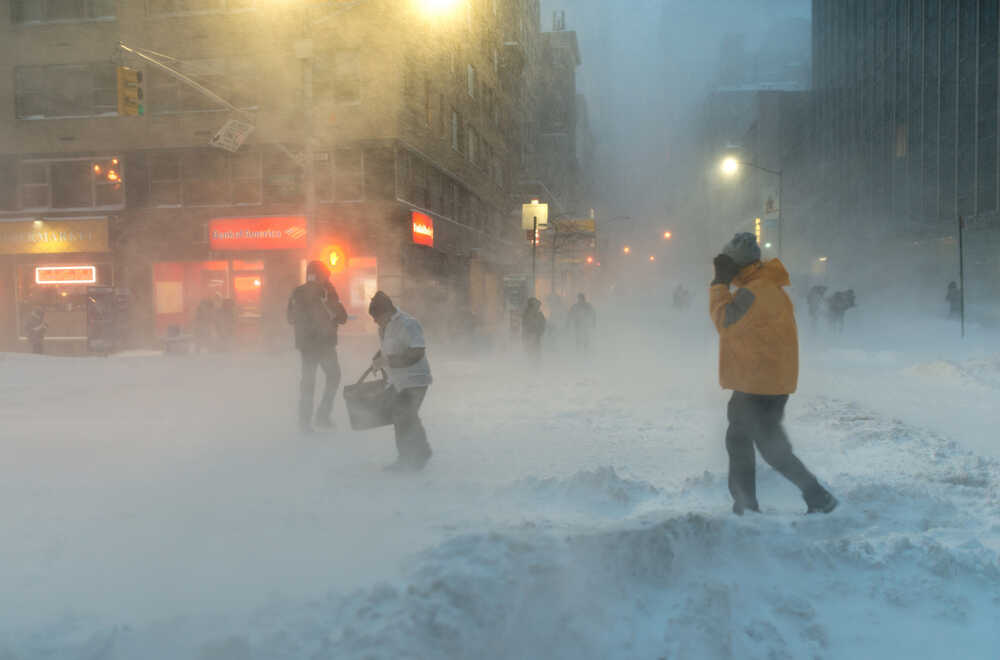
- The storm context matters: blocked hydrants, unplowed bus stops, and life-safety risks force cities to move from paperwork to action.
A Blizzard Warning Reveals What the City Values Under Pressure
New York City faced its first blizzard warning in nearly a decade as forecasts called for roughly 10 to 24 inches of snow and wind gusts that could reach about 55 mph. Governor Kathy Hochul declared a state of emergency, and Mayor Zohran Mamdani announced outreach teams to check on vulnerable residents. DSNY, the agency that lives and dies by logistics, opened the gates for per diem shovelers because snow doesn’t wait for committee meetings.
DSNY’s shoveler program isn’t glamorous, but it’s essential. The city needs people clearing hydrants, bus stops, and pedestrian choke points before the next 911 call comes from a building with no heat or a street where ambulances can’t turn. The work is physical and risky; health warnings about shoveling-related heart strain come up for a reason. The pay range reported—roughly $19 to nearly $29 an hour—signals urgency and the need to staff up fast.
The Five-Item Paper Trail: How DSNY Screens Emergency Workers
Applicants weren’t asked to simply show up with a shovel and a willingness to sweat. DSNY required two small photos, two original forms of identification plus copies, and a Social Security card. That list reads like a stress test for anyone whose documents live in a lockbox, got lost in a move, or never existed in the first place. The city also required applicants to be at least 18 and physically able to do the job.
That burden isn’t random cruelty; it’s government protecting itself. Payroll and tax compliance demand a real person tied to real records, and federal work-eligibility rules push employers toward document verification habits. DSNY also has a fraud problem to prevent: fake identities, duplicated hires, and people attempting to get paid under someone else’s name. When the city’s checkbook opens, the city suddenly believes in checkpoints, backups, and redundancy.
Voting in New York: Minimal ID, Maximum Trust, and a Safety Valve
New York’s election system runs on a different philosophy. Most registered voters can cast a ballot without showing photo identification at the polls. First-time voters in some situations may provide one of several minimal identifiers—such as a driver’s license number, a non-driver ID number, or the last four digits of a Social Security number. If questions arise, affidavit ballots function as a procedural escape hatch, letting the process continue while officials resolve eligibility later.
Supporters of this model argue it prevents disenfranchisement, especially for older citizens who no longer drive, low-income residents with unstable housing, or voters whose paperwork doesn’t match after a name change. That concern is real, and a conservative approach doesn’t dismiss it. The issue is the mismatch in institutional posture: DSNY treats identity as essential to legitimacy, while elections treat identity friction as a problem to minimize. Both can’t be the highest priority at the same time.
The Common-Sense Conservative Question: Why Is Work “High Security” and Voting “Low Security”?
The story’s punch comes from a basic American instinct: if you need a stack of documents to earn a per diem check clearing snow, why wouldn’t you need at least comparable certainty to help choose the people who write laws, approve budgets, and oversee police and schools? Conservatives don’t have to claim widespread fraud to see the logic. A system can be vulnerable without being proven catastrophic, and prevention usually costs less than cleanup.
The strongest rebuttal is also straightforward: hiring requires document verification because employers face federal compliance duties and financial liability, while voting rules are set by state election law designed to maximize participation. That explanation fits the legal reality, but it doesn’t settle the policy argument. If the goal is public confidence, elections should welcome eligible voters and still demand a clear, uniform proof of identity. Trust is not a substitute for verification; it’s the result of it.
What This Blizzard Moment Suggests About Future Policy Fights
DSNY’s recruitment call shows how quickly government can build a gate when it decides the gate matters. That’s the part many readers will remember long after the snow melts: the city didn’t say “IDs are complicated,” or “IDs are unfair,” or “IDs create barriers.” It said, in effect, “Bring the documents.” The blizzard forced a practical mindset—clear rules, clear eligibility, no confusion at the intake table.
That clarity is exactly what many Americans want in elections, too. The problem is political will, not administrative capacity. New York already maintains voter rolls, handles registration, and manages provisional processes; adding consistent identity confirmation isn’t beyond the state’s competence. If leaders truly fear disenfranchisement, they can pair any ID requirement with free, accessible state IDs and targeted help for seniors. A serious system solves both problems instead of choosing one.
DSNY never answered the bigger philosophical question in the coverage: why the city insists on strict proof for a shovel but accepts looser proof for a ballot. That silence leaves the public to connect dots on its own, and voters over 40 have seen this movie before. Government standards harden when the government risks losing money, and standards soften when leaders fear political backlash. The blizzard didn’t just dump snow; it exposed priorities.
Sources:
NYC seeks emergency snow shovelers for blizzard, requires IDs not needed to vote
NYC seeks emergency snow shovelers for blizzard, requires IDs not needed to vote
Voter ID shouldn’t be this controversial