

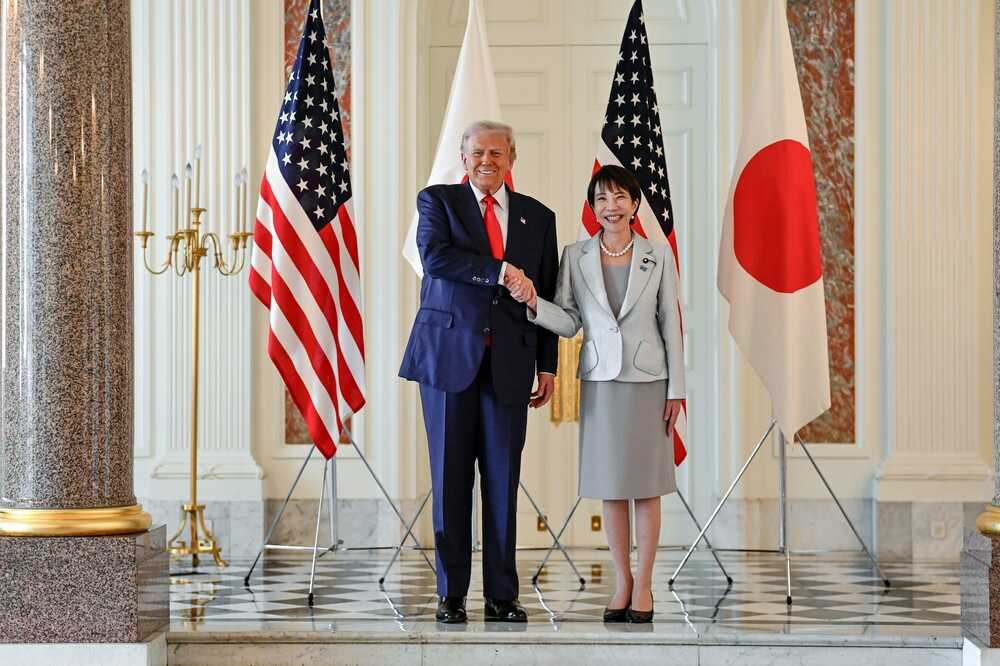
MASSIVE U.S. Endorsement Rocks Japanese Election
Japan’s first female Prime Minister Sanae Takaichi has secured a major diplomatic victory just days before a crucial snap election, with President Trump publicly endorsing her leadership in a move that underscores the strategic importance of the U.S.-Japan alliance and could reshape the political landscape in Tokyo.
Story Snapshot
- President Trump backs Japan PM Sanae Takaichi ahead of February 8, 2026 snap election, boosting her standing
- Takaichi dissolved parliament January 19-23 to capitalize on high approval ratings, seeking stronger mandate for LDP-Ishin coalition
- Polls project ruling coalition securing over 300 of 465 seats, potentially ushering hawkish right-wing policy shift
- Opposition criticizes snap election timing as neglecting economic pressures including yen weakness and cost-of-living crisis
Trump’s Endorsement Strengthens Takaichi’s Position
President Donald Trump publicly endorsed Prime Minister Sanae Takaichi ahead of Japan’s February 8, 2026 general election, providing critical international validation for her leadership. The backing comes as Takaichi puts her political future on the line in a high-stakes snap election designed to consolidate her Liberal Democratic Party’s power. Trump’s support signals strong U.S. confidence in Takaichi’s conservative approach to regional security, particularly regarding China tensions and defense cooperation. This endorsement carries significant weight among Japanese voters concerned about maintaining robust ties with Washington amid escalating geopolitical challenges in the Indo-Pacific region.
Donald J. Trump Truth Social Post 12:42 PM EST 02.05.26
The Great Country of Japan is having a very important Legislative Election on Sunday, February 8, 2026. The results of this Election are very important to the future of Japan. The Prime Minister, Sanae Takaichi, has already… pic.twitter.com/qn7XBmvmHZ
— Commentary Donald J. Trump Posts From Truth Social (@TrumpDailyPosts) February 5, 2026
Bold Gamble on Shortened Campaign Timeline
Takaichi dissolved Japan’s lower house on January 19-23, 2026, launching the shortest campaign period in recent Japanese history at under three weeks. The prime minister assumed office in October 2025 after the LDP’s poor 2024 performance under Shigeru Ishiba, when the party secured only 198 seats. Takaichi’s decision surprised even her own party members but reflects confidence in her personal approval ratings, despite the LDP holding just 30 percent overall support. She framed the election as a referendum on her leadership and the new LDP-Ishin coalition, stating she is “putting my future as prime minister on the line” for a public verdict on her conservative agenda.
Coalition Shift Signals Rightward Policy Turn
The election represents a critical test for Japan’s reconfigured political alliance after longtime LDP partner Komeito exited the coalition in fall 2025. Takaichi forged a new partnership with the right-wing Japan Innovation Party (Ishin), creating a slim one-seat majority with independents. This coalition shift has raised concerns among political analysts about a potential “hawkish, anti-welfare, xenophobic era” if the alliance secures a commanding victory. Professor Margarita Estevez-Abe of Syracuse University warns that Ishin allies could limit checks on extremist policies. The new coalition pushes anti-Tokyo-centric reforms and nationalist positions, marking a stark departure from the moderating influence Komeito previously provided on social welfare and nuclear policy issues.
Economic Pressures Cloud Election Outlook
Opposition parties have sharply criticized Takaichi’s snap election timing, arguing it neglects urgent economic challenges facing Japanese citizens. The yen hit a two-week low during the campaign period, signaling market distress and cost-of-living pressures that resonate with voters. The newly formed Centrist Reform Alliance, comprising Komeito and the Constitutional Democratic Party, campaigns on eliminating food taxes and addressing funding abuses. The Democratic Party for the People specifically blasts the election as prioritizing political maneuvering over economic policy solutions. Despite these criticisms, weekend polls from Asahi Shimbun project the LDP winning over 233 seats independently, with the coalition potentially exceeding 300 of 465 total seats available across single-seat districts and proportional representation.
The election outcome will determine whether Takaichi’s conservative gamble pays off with a strengthened mandate or backfires amid voter frustration over economic neglect. Victory would consolidate right-wing dominance in Japanese politics and potentially reshape the nation’s approach to welfare policies, nationalism, and regional security cooperation. For American conservatives, Takaichi’s success represents an important ally committed to shared values of strong defense, limited government welfare expansion, and resistance to Chinese aggression. Trump’s endorsement reinforces the strategic partnership between Washington and Tokyo under leadership aligned on protecting freedom and sovereignty in the face of growing authoritarian threats across the Pacific.
Sources:
Japan elections 2026: When is voting and what is at stake for Sanae Takaichi and the LDP?
Cheat sheet for Japan’s snap election
Japan Poised for Early General Election
Understanding Japan’s Snap Elections
Former PM Suga Yoshihide Will Not Run in Japan’s Upcoming General Election
2026 Japanese general election
Understanding Japan’s snap elections