

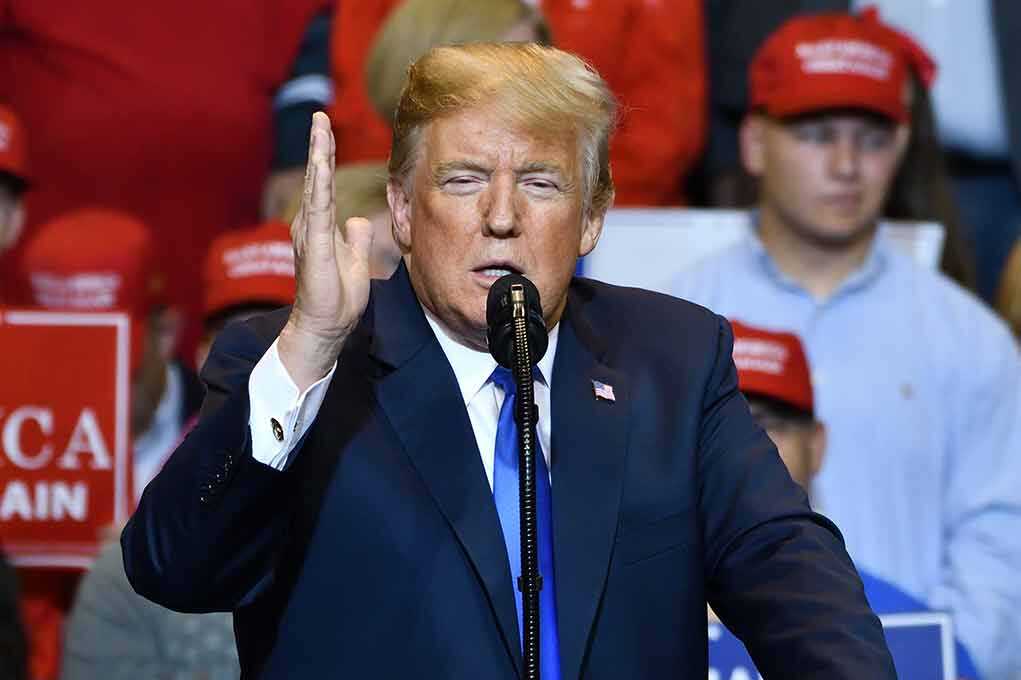
Democrats’ midterm gains and a fast-moving Nvidia-China scandal now shadow President Trump’s high-stakes Asia trip.
Story Highlights
- Democrats won control of Congress, a political setback as Trump departs for Asia.
- Nvidia’s board opened a probe after reports tied CEO Jensen Huang to a suspected Chinese agent.
- Nvidia lost about $430 billion in market value across two sessions amid the controversy.
- Trump said the Federal Bureau of Investigation (FBI) is looking into the matter and defended Huang.
Midterm Shift Raises Questions for Diplomacy Bandwidth
Reuters reported Democrats won control of Congress and framed the outcome as a sharp rebuke to President Trump and his agenda, with seat gains outpacing Republicans in key races. That political shift arrives just as Trump lands in Asia to engage leaders on trade, security, and technology. Foreign partners read election results as a sign of staying power. Congressional control also shapes budgets, oversight, and sanctions. That means every promise abroad must pass a new test at home.
History shows presidents can still negotiate after midterm losses. But the cost of making a deal can rise if Congress opposes it. Committees can slow confirmations, press agencies for documents, and alter funding terms. Export-control debates, Taiwan security language, and semiconductor incentives may now face tougher paths. The bottom line is leverage is not only about talks at the table. It is about the ability to deliver after wheels touch down in Washington.
Nvidia Controversy Collides With China Tech Agenda
Reuters reported Nvidia’s board opened an investigation after allegations that CEO Jensen Huang had a close relationship with Alice Huang, whom United States intelligence officials believed passed information to China. Reporting also said Secretary of State Marco Rubio briefed Trump aboard Air Force One in May about intelligence concerns tied to the relationship. These facts land directly in the middle of America’s push to guard advanced chips from fueling China’s military and artificial intelligence systems.
Markets reacted hard to the headlines. Reuters reported Nvidia shed about $430 billion in market value across two sessions, and its shares were down 9.5 percent since the allegations surfaced. Separate information reports alleged the relationship aided at least $7.5 billion in shipments to China, but those claims were cited as emerging reports rather than findings from a completed probe. Sharp price swings risk spooking investors and partners just as the administration needs a unified front on technology controls.
Trump’s Statements Underscore Law-and-Order Framing
President Trump said the FBI is examining the matter and relayed that Jensen Huang told him, “I had no idea that she was a spy,” adding, “I really believe him”. Trump also called Huang “honorable” and, when asked whether he would take him on the Asia trip, said, “I don’t know, but I’d certainly take him”. Those comments show Trump tying the response to law enforcement while signaling he will not rush to judgment. That stance aims to steady markets and avoid handing Beijing a talking point.
The White House must balance two goals at once. It needs to enforce strict controls on high-end chips linked to Chinese military use. It also must ensure that policy is fair, rules-based, and not driven by panic. If the FBI or Nvidia’s board clears the core allegations, Washington will want to show it protected due process. If either finds serious breaches, the administration will need to tighten controls, brief Congress, and adjust export-screening to close gaps without choking lawful trade.
What This Means for the Asia Trip’s Core Files
Trade and technology will dominate meetings with Asian leaders. Partners want clear signals about export rules, investment screening, and supply chains. They also watch for whether Congress will back new measures. The midterm map could slow big bills or add strict oversight, even as the president retains strong executive tools. Any sign of drift invites pressure from rivals. Clear timelines and crisp enforcement are the best answer to both allies and adversaries.
"US President Donald Trump heads to Asia this week, reeling from a midterm election drubbing and Chinese spy allegations that have raised the stakes for his latest face-to-face with Beijing's powerful leader, Xi Jinping.
Trump will first visit Manila for meetings with Southeast…
— Zoraida Sánchez (@Pettunia14) November 16, 2026
For conservative readers, two stakes stand out. First, guarding American technology is national security, not bureaucracy. Chips power defense systems, satellites, and the artificial intelligence that will shape the next war. Second, accountability must be even-handed and swift. If facts prove wrongdoing, consequences should follow. If not, the United States should not sideline an American success story based on rumor. Either way, Beijing should not profit from American confusion.
Bottom Line: Project Strength, Lock the Back Door
Democrats’ midterm control complicates the path for major legislation, but it does not block the commander in chief from enforcing export laws, pushing sanctions, or rallying allies. The Nvidia probe adds noise and market shock, yet the administration can turn it into a case study in resolve: protect critical chips, support honest actors, and shut down influence operations. That is how the United States defends its economy, its workers, and its national security in Asia and beyond.