

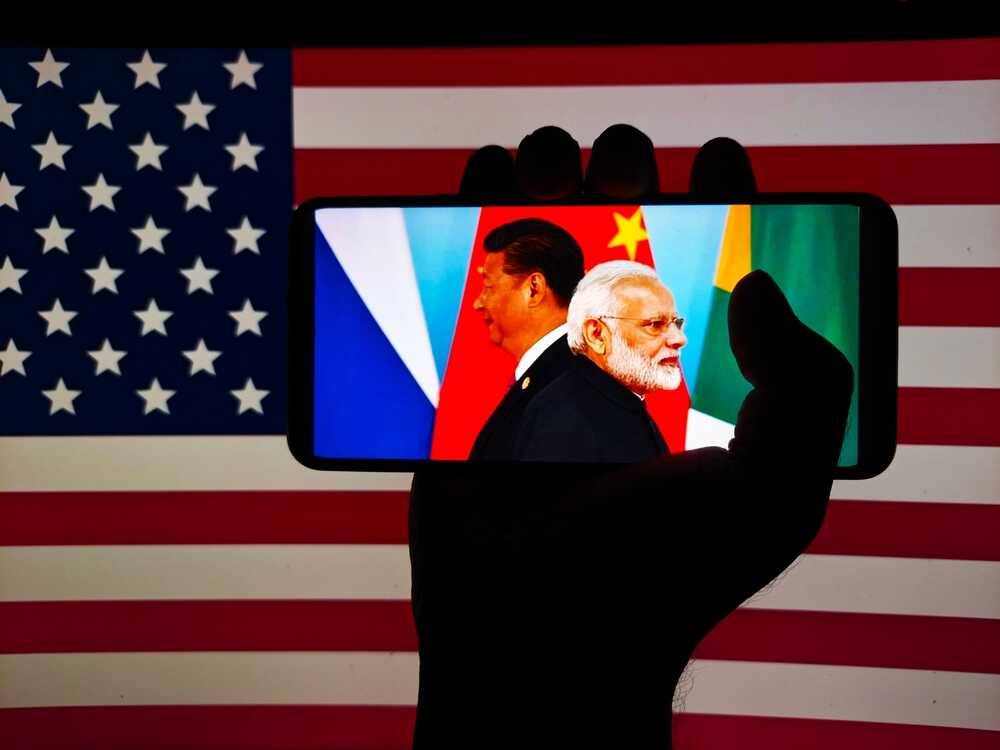
Indian Prime Minister Narendra Modi and Chinese President Xi Jinping met on August 31, 2025, in Tianjin for their first bilateral discussion in years, signaling renewed efforts to stabilize relations amid strategic shifts in the region.
At a Glance
- Modi and Xi met during the 2025 Shanghai Cooperation Organisation (SCO) summit in Tianjin.
- This marks Modi’s first visit to China since the deadly 2020 border skirmishes.
- Both leaders expressed intentions to de-escalate tensions and enhance economic cooperation.
- Recent agreements include restored flights, relaxed visa rules, and China’s lifting of strategic export bans.
- The summit coincides with growing U.S.-India trade frictions over Russian oil imports.
A Calculated Detente
Prime Minister Modi’s visit to Tianjin marks a significant diplomatic shift following years of chill in India-China ties since the 2020 Galwan Valley clash. His meeting with President Xi on the sidelines of the SCO summit has reignited speculation about a potential thaw in one of Asia’s most contentious bilateral relationships.
Both leaders struck a conciliatory tone. Xi emphasized that differences should not define the relationship, while Modi spoke of the need to “restore normalcy” and avoid military confrontations. Officials confirmed that confidence-building steps, such as troop disengagement protocols and high-level military dialogues, would continue into late 2025.
Economic Incentives and Strategic Optics
A core driver behind the renewed outreach is mutual economic interest. China has lifted export controls on rare earth elements and tunneling machinery—resources critical to Indian infrastructure projects. In return, India is exploring new avenues for bilateral trade and has agreed to streamline business visas for Chinese executives.
Transportation and religious tourism have also resumed. Direct flights between key cities were reinstated in April, and Indian pilgrims are once again allowed to visit Tibet via the Kailash Mansarovar route—a sensitive cultural issue previously suspended.
This detente carries clear geopolitical signals. With the United States imposing 50% tariffs on select Indian exports over its Russian oil purchases, New Delhi is recalibrating its partnerships. Meanwhile, Beijing is leveraging the SCO platform to project regional influence and court nations drifting from Western blocs.
Long-Term Realignment or Tactical Pause?
Though symbolically significant, the Modi-Xi meeting leaves major questions unresolved. Talks did not result in a final border settlement, and no new security pacts were signed. Analysts note that both leaders may be buying time—China to stabilize regional optics amid economic headwinds, and India to navigate shifting alignments in a post-unipolar world.
Nonetheless, this encounter follows months of quiet groundwork. October 2024 saw the finalization of new border patrolling zones. In early 2025, cultural and academic exchanges resumed. These incremental moves suggest a deliberate, if cautious, pivot toward normalized engagement.
Sources
Reuters
Associated Press
The Guardian