
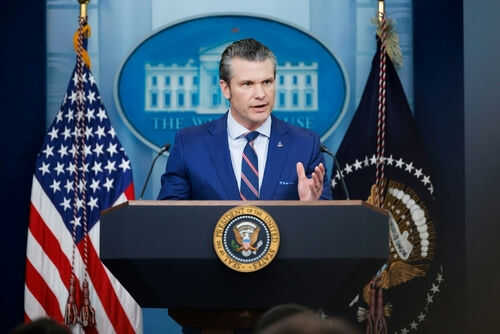
Defense Secretary Pete Hegseth declares America is “just getting started” in dismantling Iran’s nuclear ambitions and missile arsenal, signaling President Trump’s uncompromising approach to neutralizing decades of Tehran’s aggression against American interests and allies.
Story Snapshot
- Operation Epic Fury targets Iran’s nuclear pathway, missile production, and naval forces with unprecedented US-Israeli coordination since February 28, 2026
- US forces achieved 86% reduction in Iranian missile launches within 103 hours, demonstrating overwhelming military superiority
- Hegseth rejects “endless war” comparisons, framing operations as decisive action against Iran’s bad-faith nuclear negotiations and proxy terrorism
- Additional US forces deploying to Middle East as Trump administration vows to complete objectives despite expected casualties
Trump Administration Takes Decisive Action Against Iranian Threat
President Trump launched Operation Epic Fury on February 28, 2026, ordering coordinated US-Israeli strikes against Iran’s ballistic missile infrastructure, naval assets, and nuclear facilities. Defense Secretary Pete Hegseth characterized the campaign as “surgical and overwhelming,” explicitly designed to sever Iran’s pathway to nuclear weapons permanently. The operation marks a fundamental departure from previous administrations’ diplomatic half-measures, addressing decades of Iranian aggression including proxy attacks through Hezbollah and Houthi militants, threats to global shipping, and stubborn nuclear pursuits despite negotiations.
Hegseth briefed reporters at the Pentagon on March 2 and March 4, emphasizing that America operates from a position of uncontested dominance in Iranian airspace. Joint Chiefs Chairman Gen. Dan Caine reported multi-domain strikes disrupting Iran’s sustainment capabilities, targeting missile production facilities, naval vessels, and security infrastructure. The coordinated effort with Israeli forces represents unprecedented operational scale, reflecting shared security interests in preventing Tehran from acquiring nuclear weapons. This approach directly contrasts with the Obama-era JCPOA nuclear deal, which conservatives warned merely delayed rather than eliminated Iran’s atomic ambitions.
Overwhelming Results Demonstrate American Military Superiority
Within 103 hours of operations commencing, US forces achieved an 86% reduction in Iranian missile launch capabilities, according to CENTCOM reports delivered by Admiral Brad Cooper. Hegseth stated Iran “cannot outlast us,” emphasizing America’s technological and resource advantages over the Islamic Republic’s aging military infrastructure. The rapid degradation of Iran’s offensive capabilities validates Trump’s strategy of projecting strength rather than appeasement, protecting American personnel and allies who faced thousands of Iranian projectiles in recent years. Hegseth noted US intercepts saved tens of thousands of lives across the region.
Iranian Red Crescent reported 555 deaths since the operation began, including civilian casualties from a school strike, though US officials have not independently verified these figures. Four American service members were confirmed killed, underscoring the risks inherent in confronting state sponsors of terrorism. Hegseth acknowledged the “gritty work” ahead but emphasized that setting clear terms through “violence of action” prevents prolonged conflicts. This contrasts sharply with Iraq and Afghanistan engagements, where ambiguous objectives led to nation-building quagmires conservatives rightly opposed.
No Endless Wars: Clear Objectives Drive Military Strategy
Hegseth forcefully rejected media narratives characterizing the operation as another “endless war,” arguing that laser-focused objectives distinguish this campaign from past failures. President Trump personally communicated to the German Chancellor that Iran negotiated in bad faith, exhausting diplomatic options before authorizing military action. The administration’s stated goals—destroying missile production, eliminating nuclear infrastructure, and crippling Iran’s navy—provide measurable benchmarks for success rather than utopian democracy-building missions. Trump issued video statements urging Iranian military forces to defect, promising US withdrawal upon completing concrete objectives.
Additional US forces continue deploying to the Middle East as of March 5, demonstrating the administration’s commitment to maintaining operational tempo until Iran’s threat capabilities are eliminated. Hegseth’s “just getting started” declaration signals sustained pressure on the regime, potentially encouraging internal resistance within Iran. This approach aligns with conservative principles of defending American interests through strength rather than apologetic diplomacy, protecting Israel and regional allies from existential threats. The administration’s willingness to accept casualties while pursuing vital national security interests reflects understanding that projecting weakness invites aggression, as seen during previous administrations’ failures to confront Tehran’s provocations effectively.