

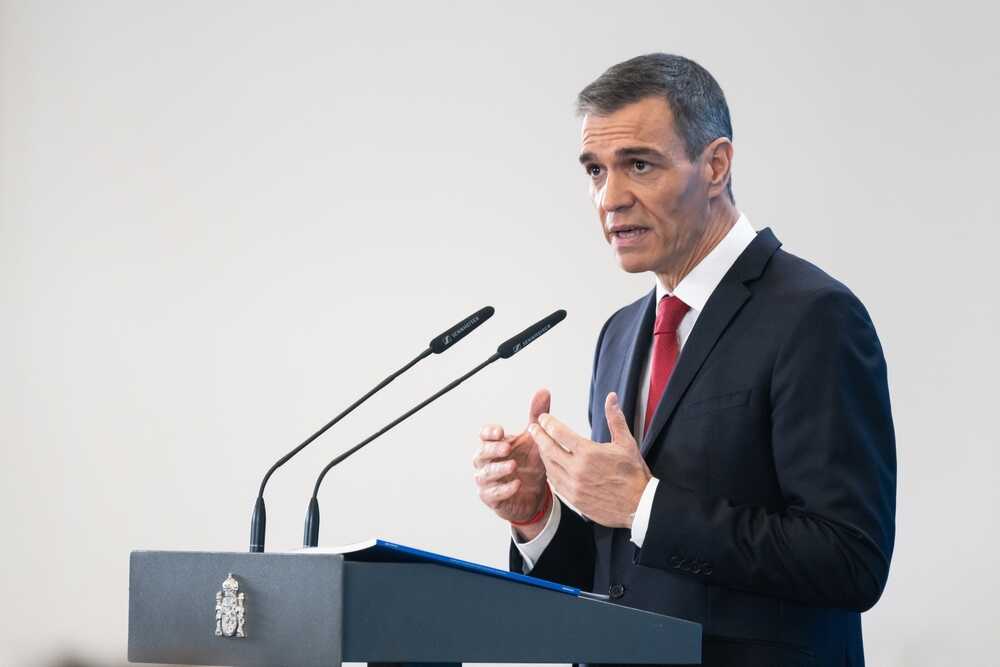
Spain’s prime minister just accused Israel of “illegally kidnapping” Europeans at sea—an explosive claim that could drag the EU into a fresh sanctions fight over Gaza.
Story Snapshot
- Spanish Prime Minister Pedro Sánchez says Israeli forces abducted Spanish and other foreign activists from a Gaza-bound flotilla in international waters off Greece.
- Israel intercepted about 20 boats carrying roughly 175 pro-Palestinian activists; detainees were taken to Israel for questioning, with reports that some leaders were sent toward Israeli prisons.
- Sánchez summoned Israel’s envoy and publicly urged the European Union to suspend its Association Agreement with Israel.
- Analysts note key facts remain contested in public coverage, including precise coordinates and Israel’s detailed legal rationale for the interdiction.
What Spain Says Happened in the Mediterranean
Spanish Prime Minister Pedro Sánchez said Israeli forces intercepted a Gaza-bound humanitarian flotilla in international Mediterranean waters off Greece and took Spanish and other foreign citizens into Israeli custody. The flotilla reportedly involved about 20 boats and roughly 175 activists attempting to deliver aid and challenge the Gaza naval blockade. Sánchez framed the operation as an unlawful abduction rather than a lawful interdiction, and he demanded the detainees’ release.
Spanish officials also moved quickly on the diplomatic front. Reporting indicates Spain summoned Israel’s envoy after the interception, signaling that Madrid intended to treat the incident as more than a routine consular dispute. In parallel, Sánchez used public messaging—including a statement on social media—to argue Israel had again violated international law. The Spanish government said it was working to assist Spanish nationals affected by the arrests.
Why Sánchez Is Pressing the EU to Escalate
Sánchez’s central demand went beyond the immediate release of activists: he called on the European Union to suspend the EU-Israel Association Agreement. That request matters because it attempts to convert a single maritime incident into broader economic and political leverage. EU institutions and member states often struggle to maintain unity on Israel policy, balancing trade ties and security concerns with humanitarian and human-rights pressures driven by the Israel-Gaza war.
The push for EU action also reflects Spain’s evolving posture since the post-October 2023 phase of the conflict, when several European governments adopted sharper criticism of Israel’s conduct in Gaza. In this case, Sánchez’s “abduction” language raises the stakes by implying a direct threat to European citizens’ rights outside Israeli territory. If EU leaders embrace that framing, it could accelerate calls for sanctions; if they reject it, Spain risks being isolated.
What’s Known—and What Remains Unclear—About Detentions
Accounts say Israeli authorities arrested activists and transported them to Israel for questioning. Some reports add that most passengers disembarked in Crete, while a smaller number of higher-profile leaders were slated for detention in Israeli prisons. Those details matter because treatment of detainees often becomes the political fuel for the next round of escalation. At the same time, public reports do not fully resolve who was released, who remains held, and under what specific legal process.
How This Fits a Longer Pattern of Flotilla Confrontations
Gaza flotillas are not new, and the modern precedent most often cited is the 2010 Mavi Marmara incident, when Israeli forces intercepted a convoy at sea and activists were killed—an event that triggered years of diplomatic fallout and international legal arguments. Today’s interception revives the same core disputes: whether enforcing a blockade justifies stopping vessels before they reach Gaza, and whether “international waters” changes the legal and moral calculus. The current coverage does not include a detailed Israeli counterargument.
What American Readers Should Take From the EU Fight
For U.S. audiences already skeptical of elite institutions, the dispute highlights how international bodies can become battlegrounds for symbolic politics as much as problem-solving. Conservatives will see another example of European leaders using trade mechanisms to pressure an ally while struggling to control their own borders and energy costs. Many liberals will view Spain’s posture as overdue accountability. The hard reality is that facts still drive legitimacy: without transparent verification of location, rules of engagement, and detainee handling, outrage can outpace evidence.
ISRAEL AND THE US ARE INTERNATIONAL PIRATES
AP News—MediterraneanSpain's Sanchez accuses Israel and Netanyahu of 'illegal abduction' of Gaza flotilla activists
|sraeli authorities said they were taking two activists who led aid flotilla bound for Gazahttps://t.co/KTZxYdwLlA
— @SpudLink-Tater (@Spudlink_Tater) May 2, 2026
The immediate next step is diplomatic: whether Israel releases remaining detainees quickly, and whether EU leaders treat Sánchez’s demand as actionable policy or domestic political theater. The broader trend is familiar—activists seek publicity through high-risk maritime missions; governments respond with interdiction; and institutions like the EU are pressured to pick sides with economic tools. With limited verified detail available in the cited coverage, readers should watch for confirmed detention lists, official legal filings, and independent location data.
Sources:
https://www.commondreams.org/tag/spain